


copyright 2013 Wilhelm Wenger and Carolyn Yeager
Translated from the German by David Coyle
Oschatz, November 18th and 26th 1939: On Wednesday November 15th I set out from Berlin and was at the airport by noon. I’ve swapped Pomerania for Saxony as my new residence. Our accommodations are set in the woods, very nicely surrounded by the pines. We are five to a room, an agreeable number, and we have parquet flooring. None of us recruits is older than twenty-one.
Gilbert Geisendorfer learned of his success in his school finals at the very last moment in an inspection. At first it seemed his schooling was done, but that turned out to be deceptive for there is always more to learn, although of different sorts of things. During this time all the other soldiers and I have learnt a great deal in new areas. Naturally no one is flying yet. I’m doing well for cash: we’re on wartime pay like all soldiers and get 1 RM per day.
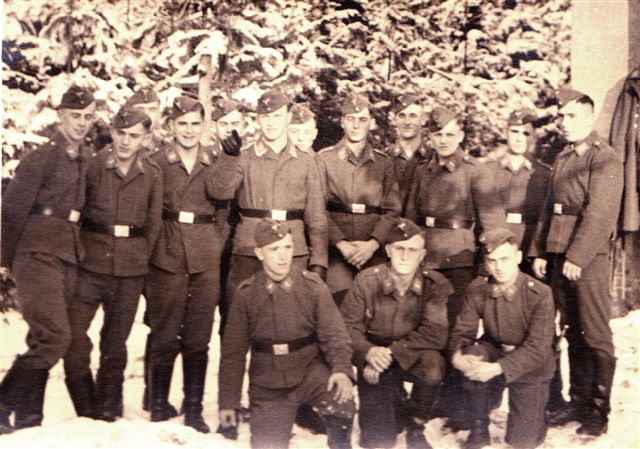
December 2nd 1939: We have been given the dates for our first leave. Christmas is out. This is the first Christmas I will celebrate far from home and family. But we've been promised that unless there is some unforeseen problem we will be on leave from December 29th until January 6th. No complaints, we recruits must be happy and thankful that we get any leave at all. Our fares will be paid.
We’ve put up Christmas wreaths in all the rooms and even in the corridor, so the barrack has taken on a festive look. We have now spent half of our conscript training period here on base, which naturally leaves us out of sorts. Tomorrow we'll be allowed off base for the first time. I’m not tempted and will likely stay at home, for I like it much better on the airfield than in the town, which is almost an hour away by foot.
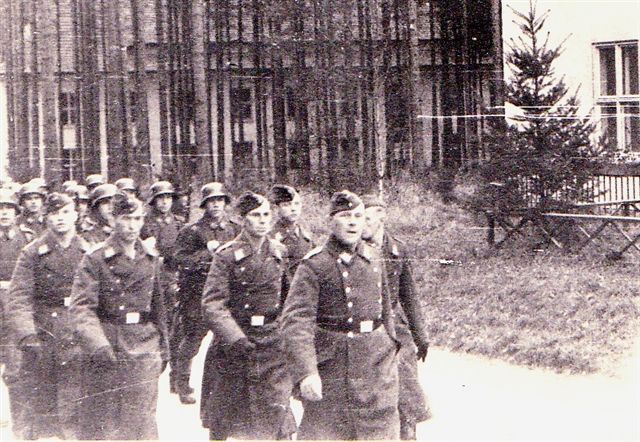
On Thursday the whole company saw Franz Lehar’s operetta Der Zarewitsch. We liked it very much and found it a pleasant surprise. At one point our group leader arranged an evening party for us in the canteen. Of course, I don’t much care for these evenings of chat and beer guzzling, but you mustn’t isolate yourself. Besides our NCO is a sensible man, and the other groups can really envy us. An example: I was issued a brand-new topcoat, which one of the instructors tried to force me to trade for an older one; our NCO heard about it, and I kept my new coat. We all find him agreeable. About the locals: These Saxons! What a people! I like the Prussians much more, but men are creatures of habit.
My room-mates consist of another two officer cadets, a cabinet maker, a baker and a locksmith. A few days ago we officer cadets started wearing red stripes on our epaulettes, so we must be careful to put on a good show. I like our living quarters very much, except for the horrible amount of smoking. This is something I shall never get used to for it nauseates me at once.
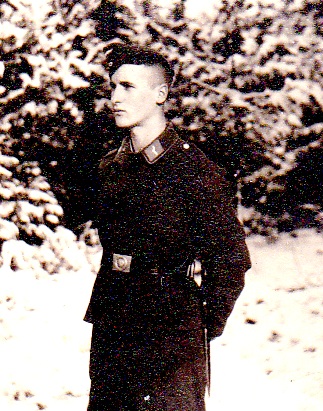
December 9th 1939: Right, so I’ll be home on the 29th. Until then we shall be following a tough routine with no time for the celebrations. Besides, in these parts we shall be having recruit inspections over Christmas, and so there are daily preparations. My old classmates from Leoben sent me a card. It's hard to imagine being back at school again, and I don’t envy them. Here we have a fine life, even though the pace is “quick step” from morning to night.
Tomorrow we are again allowed out until 11 pm, and perhaps I will overcome my disinclination and go into town. Of course I'd much rather have my Sunday rest to sleep myself out. There is a big Christmas celebration planned for the company, but I think that if there is to be beer without limit it could turn out to be a booze-up.
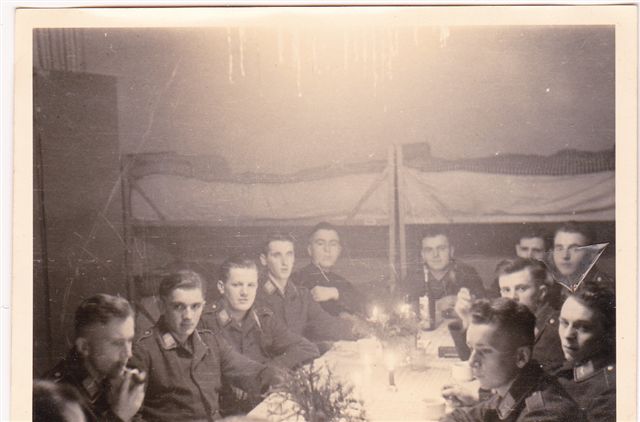
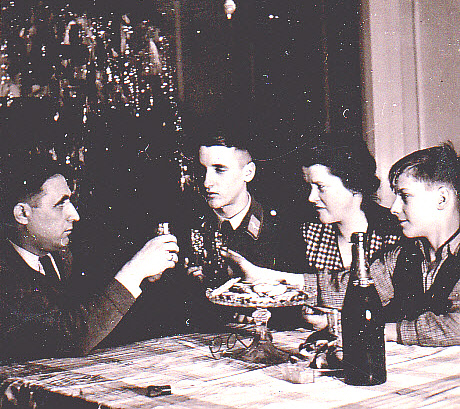
December 20th 1939: Now my recruit training time is done. On Monday we had our recruit inspection and it turned out very well. We are all happy that it is over and done with. Now we are having a quiet time of it, and it is such a strange feeling, as if every day were Sunday. Aunt Leni sent a Christmas package from Pernegg, and Grandmother sent a packet with apples from Gleichenberg. In addition the company made a fine Christmas celebration in which every soldier got apples, nuts, and cigarettes as well as a great Christmas stollen [a bread-like fruitcake]. And so my locker is as stuffed full as a hamster’s storeroom. I also have had my first trip off base, which was only good for more saluting than on the airfield.
We were all deeply shaken by the fate of our battleship “Admiral Spee”. This was certainly no minor loss for the navy. Here the candles burn every evening on the Christmas wreaths, and increase the anticipation for the holiday. I hope there is plenty of snow at home. In any event Willy should keep himself ready for ski outings. I am very glad that I can at least get home for the New Year. I am also very curious to find out what my little brother Gerhard looks like.
At the Pilsen Pilot School
Yesterday, January 21st 1940, I was the first to arrive in our room at about 8 pm. The last occupant arrived at noon today. The train was well heated and I got some good sleep. The barrack was much less pleasant . . . during the thaw, water had got through and some of the beds, chairs and flooring were covered with ice. Luckily, my bed was better positioned and spared. I turned up the heat at once and things improved before the first of my new roommates trundled in after midnight, one of them with a radio.
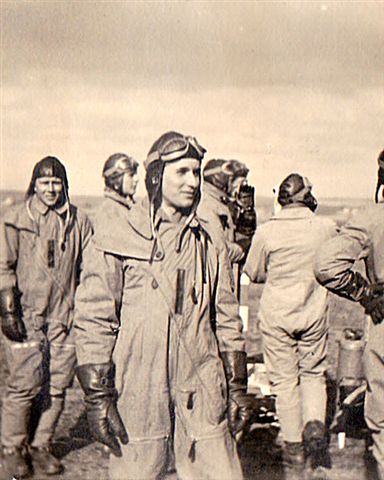
February 8th 1940: We have had a hard freeze and quite a bit of snow. But yesterday there was a sudden thaw. The miseries changed correspondingly: earlier feet were cold, now they’re wet. Today it was into the flight suit and furlined boots for the first takeoff, and then straight up. This is quite a different thing to flying a glider; now I’ve got to know Pilsen and surroundings from the air. It’s funny how small people and houses appear, almost like toys, quite unreal. I found it especially difficult to locate myself on the map, but it’s supposed to be hard in winter. I hope the weather stays as good as today for a long time; there’s no takeoff in bad weather. From 6,000 down to 1,000 meters you have such a wonderful, unobstructed view; couldn’t be bettered from any mountain-top. The first flight was in a Stieglitz FW44 and lasted 21 minutes; the second was in a Heinkel He 72.
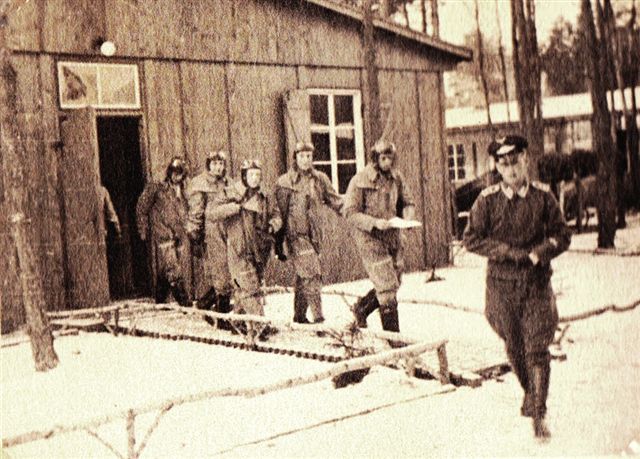
February 13th 1940: There’s a mass of news from home. More than anything else, I’m glad our boys from the west front will be spending their leave in the Untersteiermark [Styria] . . . I don’t know what I would give to be able to help. There’s not much to report here. The wonderful thaw stopped as suddenly as it started, and has turned to a shitty cold with slick ice everywhere under a dusting of snow. You cannot imagine the cold when flying; you must take care not to land with frostbitten cheeks or nose. By now I’ve been in the air quite a bit, and also been thoroughly bounced about. Every day must be used for training, so now even Sundays must be spent on the base while there is good weather. But we do as we please off-duty, so tomorrow I hope to visit the cinema. “D III 88” is playing. [A German film about pilots-in-training with a dramatic plot -cy]
There’s a story to tell about the canteen, for although our pay has gone up we also spend significantly more. Sadly, in this canteen there is everything to tempt a soldier’s heart, and we go past it every lunchtime—there’s beer, milk, spirits, eggs, sausage, etc. When I think how little milk you get at home, while there’s no limit for us here, I can only shake my head.
I hear that the school finals will everywhere now be held in February, which surely means the school year will also end early: Willy must make sure to finish in good order. The next time I get home on leave I hope my little sister will be less skinny, and Gerhard will be able to run to greet me.
Pilsen February 18th 1940: Yesterday afternoon we had fine weather, and I went up six times. Willy seems to think I’m flying a Ju 52. Quite the contrary: I’m flying a little two-seater biplane.

Apparently a cold wave has descended on the entire country. Sometimes, the temperature is only -20º in the mornings. In spite of the fur-lined boots I have chilblains on both feet, which is not much fun. But we have been issued thick pullovers and warm scarves against the cold, and so far there are no cases of hypothermia.
Odds and ends: We have now also been issued walking-out dress and flat caps, though I prefer my old uniform. My thanks to Willy for the Condorlied, but as we sing it a couple of times almost every day I already knew it fairly well. I saw the film "D III 88" that Willy likes so much.
Heise [the friend from the Napola Köslin] is now stationed in Potsdam. I learnt from him that our Latin master at Köslin, Lieutenant Adam, has died on the Western front. I don’t know at all where Gilbert Geisendorfer is located. Neumitz from Steyer is in Mähren, and is also flying regularly.
I had to break off this letter as we still had flight duty this afternoon. I made five more take-offs. Visibility was poor today with considerable ground mist. It just now occurs to me: we will probably be able to choose whether to take our leave at Easter or Pentecost. If so, I'll choose Pentecost, I think that would be best.
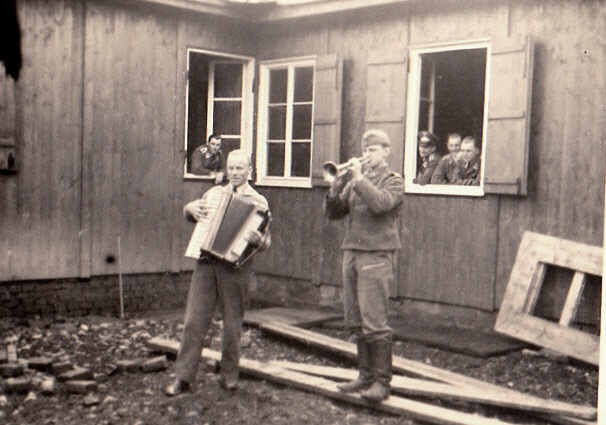
Pilsen, March 3rd 1940: On Luftwaffe Day we were off-duty in the afternoon, so I was able to get into town fairly early. I took the opportunity to shop for some items that are becoming scarce. Just about everything is available here, naturally not everyone has this chance, so please write and tell me what what you might need. For example, shoes, socks, shirts, yarn, etc. I’ll send the whole lot home as soon as the customs barrier is lifted. For myself, I picked up a flying shirt, socks, darning yarn and handkerchiefs; we had just got our pay. So write as soon as you can, so that I have time to get everything.
The weather here is now first rate and the snow almost gone, so that we can hope to put in a really good amount of flight duty. I flew eight times yesterday, and today we have our first free Sunday. A rumour is going the rounds that we shall be posted to another station. Well, well! We shall see.
Now to quickly answer Willy’s questions. Whether I also control all motion of the joystick? Willy will be excited to hear that we hope to be making our first solo flights by the end of the month. How many times I have flown? A huge number of times. And our flight suits are not heated. I hope that satisfies him.
Pilsen March 18th 1940: Last week I was on sentry duty Thursday and Friday, on exactly the day when there was a great parade of the troops through Pilsen celebrating the anniversary of our occupation. I was only able to see the fly-past in the distance. The weather was wonderful, yes so wonderful that the field thawed completely and men and machines were stuck fast in the muck. But now it has snowed again. It makes you sick. We were already celebrating the end of this rotten weather.
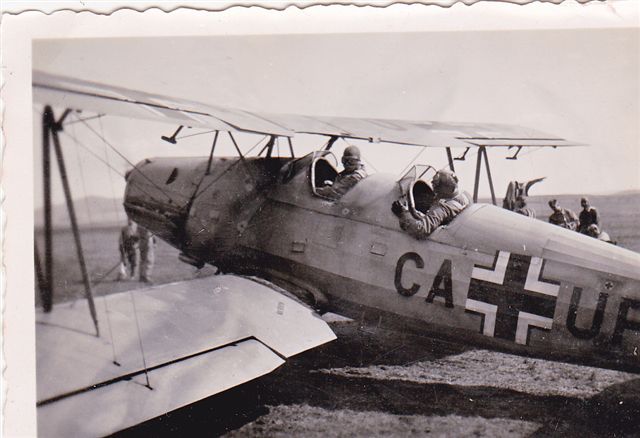
Father asked if I was flying solo yet. This is the way it is—on the first flights the instructor sits in the front observer’s seat and we students sit behind him in the pilot’s seat. For some time now, I believe I can say that it’s quite as if I were flying solo. If the weather were only halfway decent, and the field a bit drier, then there would not be much missing to feel as an independant “lord of the skies.”
When my instructor wanted me to practice dealing with dangerous conditions, I flew above the clouds for the first time—we flew around, over and through the towers of cloud. That was quite undescribably beautiful, and we were also quite high. And then, pactice for emergency landing, a crazy business. The instructor cuts off the fuel and shouts, “Emergency landing!” At about 1,000 feet one must already have one’s eye on a likely surface. You come down any way you can, and get aligned for a landing. But as soon as the wheels touch the ground, the fuel is switched on, and up you go again. And this is repeated somewhere else from the beginning. Of course, the funniest thing is to catch a couple of people in a field, and then watch them tearing away from the machine roaring down at them.
You can see what fun we have at our work. Yesterday, Sunday, was Armed Forces Day. The local German population were allowed onto part of the airfield, and a couple of the instructors did some low altitude stunt flying. One of the hangers was cleared out and turned into a sort of beer pavilion. You are quite right, our machines are open crates, with just our heads peeping out. Willy would never see a thing without a couple of pillows packed under his parachute.
Pilsen, March 26th 1940: Easter is past, it was quite lovely. Of course I was lumbered with sentry duty on Good Friday and the following day as well, but on the Monday we took a very early bus to Karlstein, and from there on to Prague. Our Lieutenant treated us to this wonderful trip, and acted as our guide. First we looked over the Karlstein castle, the old repository of the Reich insignia. We also took our luncheon there and then went on to Prague, where we were given a fact-filled guided tour of the city. Partly by motor, and partly on foot we were led through the historic sites. We were in Hradschin in the coronation chambers under the care of the Reichsprotektor. Through the window of the Fenstersturz ["Defenestration" - Also see here], we gazed at a marvellous panorama of the city. Next we were in Wallenstein’s palace.
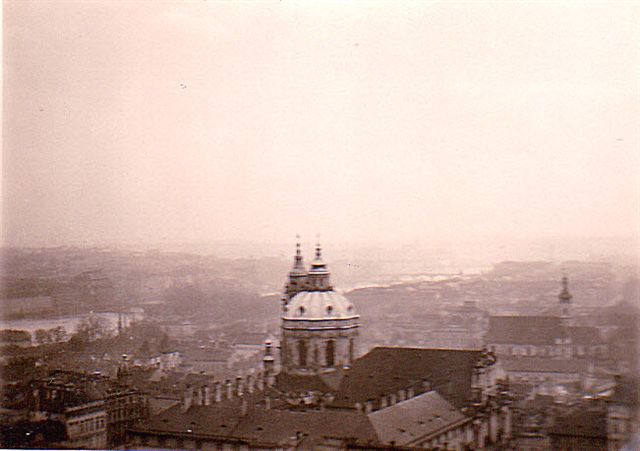
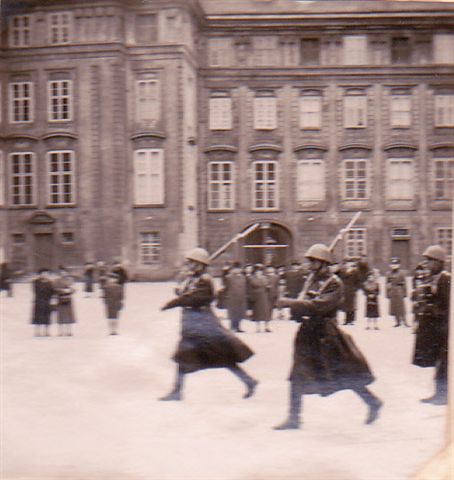
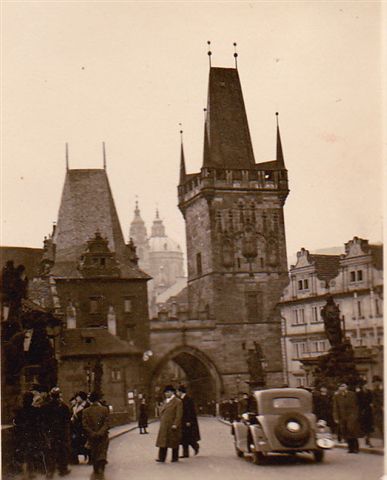
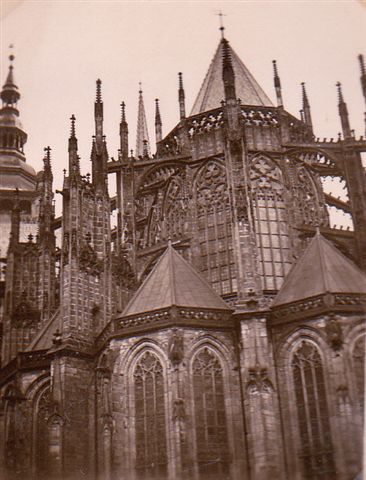
We had seen so much that we could scarcely retain it all. In the evening we still had two hours to spare, so we settled into a cafe in Wenzelplatz and looked out at the lively bustle in the streets. One would never see such a commotion in the streets of Pilsen. We returned to Pilsen during the night
The trip was a complete success for what I believe was our lieutenant’s plan, namely, as they say, to expand our artistic and historical horizons. For all of us, it was especially beautiful. In addition we were also given a holiday package: two cigars, 20 cigarettes, and two pounds of apples. They could have passed me over for the smoking supplies, but smokers among us were very pleased.
Pilsen, April 3rd 1940: Today was a very special day for me. After three weeks the weather was finally good enough for flying, and on top of that I was able to make my first solo flight. My dear Parents, I think it may entertain you and Willy to know how it turned out for me and how I felt.
Well, everything went quite quickly. First two flights with my flight instructor, then one with the instructor for the group, and then the front seat was empty. There were two little red flags marking the machine as containing someone “dangerous,” and warning all other machines in the air to keep their distance. At last I had the signal to start, and off I went at full throttle. Through it all I was not excited or unsure in the least: it was simply a repetition of the hand movements I had practiced so often, and for the rest I relied entirely on the feel of the plane. All through the flight I could feel the effect of the reduced weight it was carrying – all on it’s own the machine climbed up and away, and so I flew over Pilsen’s suburbs. And then came the landing. I had surely practiced enough, what could go wrong?
When I rolled back to the starting line, the flight instructor was the first to come and congratulate me, and then came all the others, all of them one after the other. With us, the first solo flight is a great occasion. Two others managed their first solo flights today so that this evening everyone is in great spirits. Altogether I was up five times solo.
So that’s the latest news. I’m sure you’ll share my pleasure over this first successfully completed test. I hope the good weather holds for a few more days so that we can thoroughly exploit this happy time. According to what we have been told, we may be reposted as early as next week, but so far nothing is certain.
The customs barrier into the Reich has still not been lifted. A request for Willy: could he kindly dig up Gilbert’s address for me? Willy flatters me when he asks if I am already a lance corporal. I’m afraid we will have to wait just a little bit longer.
To be continued -
- Printer-friendly version
- 5096 views