
Home
Carolyn Yeager
Now Retired but Still Readable

Main menu

  • Home
  • Welcome
  • About
  • Contact
  • Kriessmann Archive (opens in new tab)
  • Donate

Breadcrumb

  • Home
  • The Wehrmacht War Crimes Bureau

Radio Archives

  • The Heretics' Hour
  • Saturday Afternoon
  • "Hitler's Table Talk" Study Hour
  • "The International Jew" Study Hour
  • Wehrmacht War Crimes Bureau
  • The Revisionist Report
  • Other Podcasts
  • Problems Listening?

Click here to go to Elie Wiesel Cons the World

Elie Wiesel Cons the World

Popular Articles

The Fake Legends of Adolf Hitler’s “Jewish Grandfather”
Views: 180,880
How many times does it have to be said? Hitler didn't have dark hair.
Views: 82,301
"Why We Are Antisemites" - Text of Adolf Hitler's 1920 speech at the Hofbräuhaus
Views: 71,001
Hans-Ulrich Rudel: The man who might have been the next German Führer
Views: 67,317
The Search for WWII Mass Graves
Views: 53,585
The Solutreans - First Americans May Have Been European
Views: 46,922
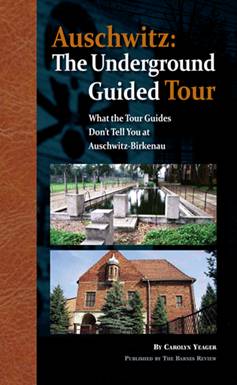
Auschwitz: The Underground Guided Tour
Views: 44,383
The Gleiwitz “False Flag” Incident is Pure Fiction
Views: 41,922
Known Pedophile is Instrumental in Promoting Holocaust Hoaxer and Plagiarizer Denis Avey's New Book
Views: 40,710
Meltdown for Tanstaafl
Views: 35,242
The Case Against Denis Avey, the BBC, and the British Government
Views: 27,120
Gerhard Ittner may seek justice from UN Human Rights Committee
Views: 26,152

The White Network

Click here to buy my book, Auschwitz: The Underground Guided Tour
Read this book

The Scriptorium

The Wehrmacht War Crimes Bureau

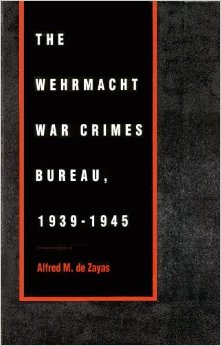
The Wehrmacht War Crimes Bureau, 1939-1945 - 1st Installment

By carolyn | 7:32 PM EDT, Mon June 22, 2015

Your browser does not support the audio element.

Wehrmacht War Crimes Series_1_6-21-15.mp3 (21 MB)

June 22, 2015

In this first installment, Carolyn reads selections from the Introduction by Alfred de Zayas and the full content of chapters one and two. Some highlights:

  • Some history of war crimes investigations from WWI;
  • Learning from that war, the German govt. established a new war crimes bureau on Sept. 4, 1939;
  • Name, history and statements from some of the Wehrmacht judges;
  • The author's negative attitude toward the Third Reich and praise for members of the resistance brings up some issues;
  • Hitler's "Barbarossa Decree" of 13 Sept. 1941 is read in full and discussed. 1h33m 
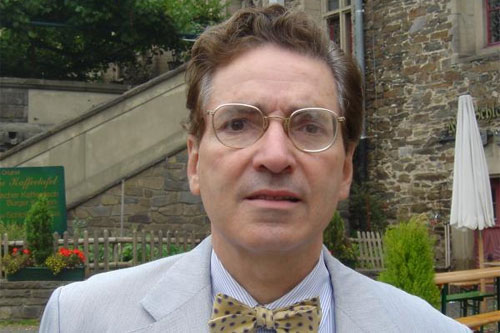
An idealist and United Nations advisor, Alfred de Zayas today still has hope for Democracy and the sovereignty of nations.
An idealist and United Nations advisor, Alfred de Zayas today still has hope for Democracy and the sovereignty of nations.
  • Read more about The Wehrmacht War Crimes Bureau, 1939-1945 - 1st Installment
  • 7 comments
  • 772 views

The Wehrmacht War Crimes Bureau, 1939-1945 - part 2

By carolyn | 8:23 PM EDT, Fri June 26, 2015

Your browser does not support the audio element.

Wehrmacht War Crimes Series_2_6-26-15_0.mp3 (16.12 MB)

June 26, 2015

Carolyn reads chapters 3 and 4. Chapter three is titled "Related German Agencies" and describes the numerous other official agencies with whom the War Crimes Bureau collaborated, and how cooperation was carried out.

Chapter four, "Methods of Obtaining Evidence" tells us how cases were built and gives some vivid examples of mutilations and other outrages committed against German soldiers on the East, West and South Fronts. The bulk of the testimony (approx. 85%) came from ten's of thousands of sworn witnesses giving depositions to military judges or local courts. 1hr11m

  • Read more about The Wehrmacht War Crimes Bureau, 1939-1945 - part 2
  • 1 comment
  • 267 views

The Wehrmacht War Crimes Bureau, 1939-1945 - part 3

By carolyn | 7:41 PM EDT, Mon June 29, 2015

Your browser does not support the audio element.

Wehrmacht War Crimes Series_3_6-29-15_0.mp3 (16.34 MB)

June 29, 2015

Carolyn reads chapters 5 and 6. Chapter 5, "The Testimony of Witnesses," looks into how credible witness testimony was obtained by the judges. All witnesses took a "real" oath, and the judges sought verification for all testimony, sometimes going to great length to do so.

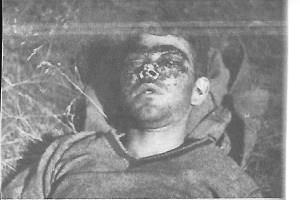
Chapter 6, "Expert Medical Opinion" explains how medical officers distinguish the nature of wounds, whether from battle or deliberate mutilation, whether inflicted before or after death. The most common mutilations (which occurred daily on the Eastern Front) were the gouging out of eyes and the cutting off of genitals. Severing feet and hands was also carried out by the savage Soviet troops and Jewish partisans. 1hr12m

Corporal Hans Muth, victim of mutilation: medical examination determined that his eyes had been deliberately put out while he was unconscious. 

  • Read more about The Wehrmacht War Crimes Bureau, 1939-1945 - part 3
  • 1 comment
  • 397 views

The Wehrmacht War Crimes Bureau, 1939-1945 - part 4

By carolyn | 7:58 PM EDT, Mon July 06, 2015

Your browser does not support the audio element.

Wehrmacht War Crimes Series_4_7-6-15.mp3 (10.72 MB)

July 6, 2015

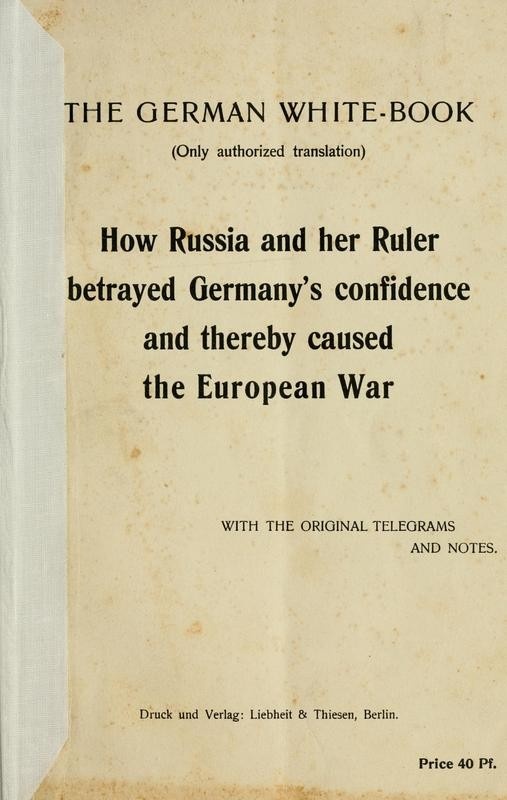
Image: A German White book from the First World War, 1914. I could not find a single image of a WWII White Book. Are they outlawed?

Carolyn reads chapters 7 and 8, having to do with how Bureau investigations were used by the German government and by the Wehrmacht.

Chapt. 7 talks about White Books and White Papers which were put out by the German Foreign Office. One unexpected and disappointing development was that when photographs of the atrocities committed on Germans in Poland were published in the White Books, there was such an outcry over the "horror pictures" that Germany stopped adding those images. Naturally, since the Germans didn't commit mutilations on their enemies, the other side didn't have such pictures to print. 

Chapt. 8 is about the use of Bureau investigations for "Diplomatic Protection" for prisoners of war, the wounded, medical personnel, etc. A number of examples of protests are given, on both the West and East Fronts (South too). Something I did not know: "thousands of German POW's had already been liquidated by Soviet forces in the first weeks of fighting." 47m28s

  • Read more about The Wehrmacht War Crimes Bureau, 1939-1945 - part 4
  • 201 views

The Wehrmacht War Crimes Bureau, 1939-1945 - part 5

By carolyn | 1:00 PM EDT, Mon July 20, 2015

Your browser does not support the audio element.

Wehrmacht War Crimes Series_5_7-20-15_0.mp3 (14.34 MB)

July 20, 2015

Carolyn reads chapters 9 and 10. Chapter 9, "The Bureau and War Crimes Trials," describes what went into the decisions to hold trials against prisoners of war in German custody. It's divided into sections for Polish, French, British & American, and Russian POW's.

Chapter 10 discusses reprisal actions by the Wehrmacht troops, many of which were threatened but never carried out. De Zayas continues to show his moderate bias for the Allied side and against Adolf Hitler's N-S regime. 1h3m

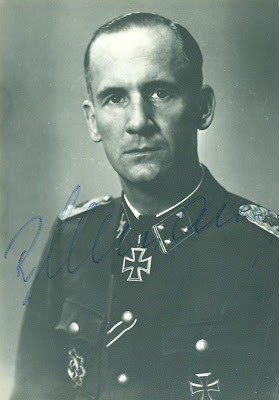
Rudolf Lehmann was a respectable German jurist who was Judge Advocate General of the Wehrmacht in WWII. He joined the NSDAP in 1935, was arrested by the Americans in 1945, found guilty of war crimes at the Nuremberg High Command trial in 1947. Sentenced to 7 years imprisonment, he was released in 1950, as was typical.

  • Read more about The Wehrmacht War Crimes Bureau, 1939-1945 - part 5
  • 1 comment
  • 444 views

The Wehrmacht War Crimes Bureau, 1939-1945 - part 6

By carolyn | 8:06 PM EDT, Mon July 27, 2015

Your browser does not support the audio element.

Wehrmacht War Crimes Series_6_7-27-15.mp3 (16.49 MB)

July 27, 2015

Carolyn reads chapters 11 and 12. Chapter 11 is titled “Investigations of German War Crimes” which discusses Adolf Hitler's “Order Number 1” (which was not a war crime but allows de Zayas to bring up the concentration camps and alleged “extermination of Jews”); alleged war crimes in North Africa; the status of medical personnel; alleged crimes during the Allied invasion of Europe and at Malmedy.

Chapter 12, titled “Wehrmacht Conceptions of Postwar International Law,” covers ideas that were being developed for a more German-friendly Convention of international laws of war. The current laws, they thought, represented British interests. 1h12m

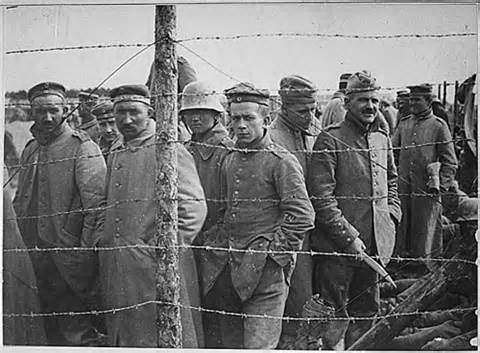
Unidentified prisoners of war (POW's) whom are supposed to be protected by the Geneva Convention.
  • Read more about The Wehrmacht War Crimes Bureau, 1939-1945 - part 6
  • 189 views

The Wehrmacht War Crimes Bureau, 1939-1945 - part 7

By carolyn | 8:49 PM EDT, Mon August 03, 2015

Your browser does not support the audio element.

Wehrmacht War Crimes Series_7_8-3-15.mp3 (11.73 MB)

August 3, 2015

Carolyn reads Chapter 13, titled "Poland." The German War Crimes Bureau was set up on Sept. 4, 1939 in response to the huge increase of reports of attacks against ethnic Germans, mainly from the former German provinces of Posen and West Prussia.

The first judges arrived as early as Sept. 9 and began taking depositions at Bromberg and Hohelsalza. By the end of October, they had six volumes of documents and commentary, each about 500 pages, organized as follows:

  • 1) Polish atrocities in Bromberg, Pless, and Stopnica;
  • 2) Polish atrocities against ethnic Germans and POW's in Poznan;
  • 3-4) Violations of laws of war by the Polish Army;
  • 5) Massacre of ethnic Germans in Lodz;
  • 6) Polish murders of ethnic Germans (an addendum).

The Bureau's investigations found no evidence of franc tireur or “fifth column” activities among the ethnic Germans, which is what Polish soldiers and civilians were claiming as excuses to rob and kill them. The chapter ends with de Zayas asserting that German SS and SD were committing what he considered to be war crimes against Polish irregular fighters. 51m

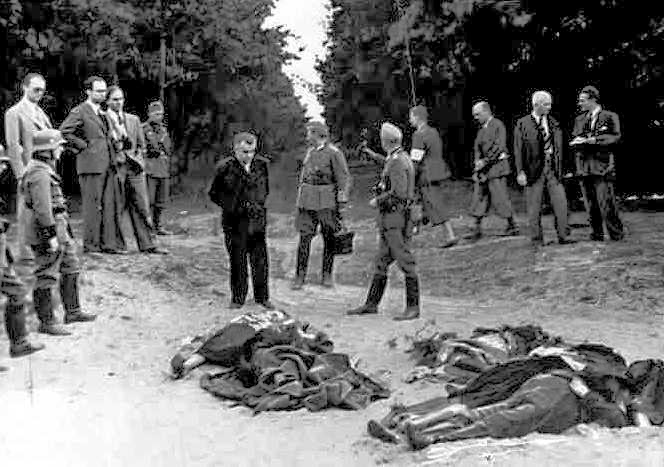
Below: Journalists of the major Western press on May 4, 1939 "convince themselves" of the reality of Polish crimes against minority Germans. Standing over the bodies is a German Catholic priest.
  • Read more about The Wehrmacht War Crimes Bureau, 1939-1945 - part 7
  • 1004 views

The Wehrmacht War Crimes Bureau, 1939-1945 - part 8

By carolyn | 12:38 PM EDT, Mon August 10, 2015

Your browser does not support the audio element.

Wehrmacht War Crimes Series_8_8-10-15.mp3 (16.01 MB)

August 10, 2015

Carolyn reads chapters 14 and 15.

Chapter 14 is titled "The Western Theater of War" which covers:

  • Crimes by English soldiers against civilians, mainly in Belgium;
  • Crimes against German soldiers in France;
  • The French Resistance.

Chapter 15 is titled "Crete":

  • Violations of International Law  by British Armed Forces and Cretan civilians;
  • Mutilation of German corpses was widespread, which brought on reprisals against civilians;
  • Eyewitness reports by Wehrmacht survivors of British killings of wounded Germans. 1hr10min
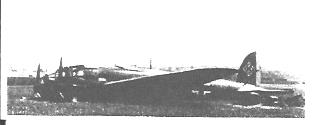
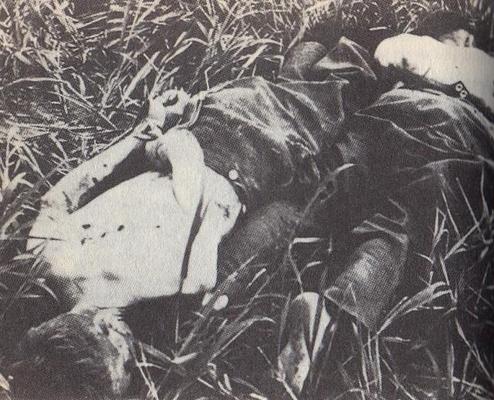
Remains of the crew of a Heinkel 111 that landed in Doullens, near Vimy, France in June 1940

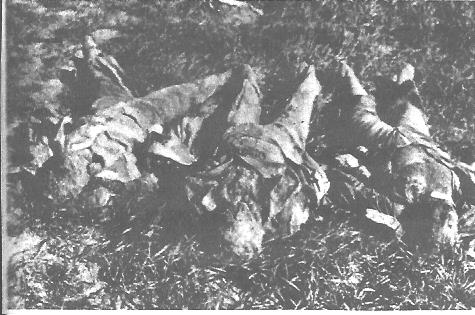
a Heinkel 111 that landed in DoullensAbove: Remains of the crew of a Heinkel 111 that landed in Doullens, near Vimy, France in June 1940, and were lynched by French civilians (and badly beaten too, it appears), but try to find something about it on the Internet. You won't. These photographs are from the Bundesarchiv, published in De Zayas' book. Fortunately, a court-martial was held on June 6, with three perpetrators being sentenced to death. The sentence was carried out on June 29. (Read something about it in chapter 9.)
  • Read more about The Wehrmacht War Crimes Bureau, 1939-1945 - part 8
  • 478 views

The Wehrmacht War Crimes Bureau, 1939-1945 - part 9

By carolyn | 2:10 AM EDT, Fri September 04, 2015

Your browser does not support the audio element.

Wehrmacht War Crimes series_9_9-4-15_0.mp3 (14.1 MB)

September 4, 2015

Carolyn reads Chapter 16, "Captured German Soldiers in the Soviet Union."  Stalin and the Red Army had a policy of German genocide and it was evident on the very first day of the war. Main themes:

  • Massacre at Broniki on July 1, 1941 when 180 mostly wounded Germans were stabbed, shot and grenaded to death with never anyone punished for it; 
     
  • Captured reports and orders, leaflets and intercepted radio and wireless messages, plus testimony of Soviet POWs all told of the policy of executing prisoners of war;
  • Seven ways the Soviets justified the killing of prisoners;
  • How the Soviets pretended they were following the Hague Conventions of war;
  • Commissars and/or lower ranking officers were responsible for ordering the killings, but there were numerous reports of a Stalin Order.

War Crimes Bureau members believed that Stalin was responsible for the wide-spread killing of German prisoners of war. 1h2m

Actual photo from the Broniki Massacre. 180 surrendered, wounded Germans were robbed, had their hands tied behind their backs and were stabbed and shot. Twelve survivors testified to the cruel treatment and carnage.
  • Read more about The Wehrmacht War Crimes Bureau, 1939-1945 - part 9
  • 449 views

The Wehrmacht War Crimes Bureau, 1939-1945 - part 10

By carolyn | 4:27 PM EDT, Mon September 14, 2015

Your browser does not support the audio element.

Wehrmacht War Crimes Series_10_9-14-15.mp3 (13.28 MB)

Sept. 14, 2015

Carolyn reads chapters 17 -“Feodosia”, 18 -“Grischino” and 19 -“Soviet Crimes against Non-Germans.” These chapters give further evidence of the Soviet policy of killing all Germans the Red Army was able to get it's hands on, plus adding sub-human mutilations such as cutting off body parts or killing with shovels and pickaxes. You will be horrified at some of the things you hear in this reading.


  • In Feodosia, 160 severely wounded German soldiers convalescing in hospitals were thrown out the windows and left to freeze to death by Red Army troops;
  • In Grischino (close to current Donetsk, Ukraine), nearly 600 Germans and their allies were murdered, mostly by shooting, plus the women first raped, when the Red Army temporarily reoccupied the town;
  • Spanish, Italian and Crimean soldiers received worse treatment from the Soviets than did the Germans, and thousands of interned Ukrainian and Baltic civilians were shot before the Soviets abandoned the locations. 58min
     

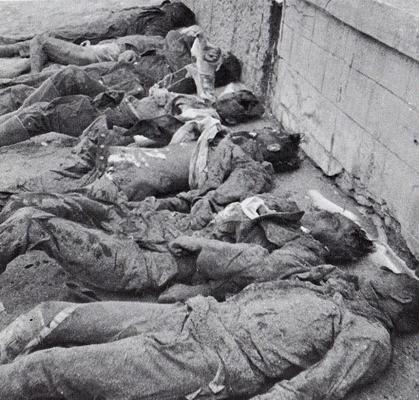
Image below: A few of the 160 hospitalized German soldiers who were thrown out of 2nd floor windows of hospitals in Feodosia by Red Army soldiers and then down a several meter high wall, where they were left to freeze. Some were carried to the Sea and left in the surf to freeze. The material at the upper left of the picture is iced-over snow. Enlarge (This is the only picture to be easily found from all the accounts in these three chapters. History pages and Google and Yahoo images wipe it all clean; they only want atrocities BY Germans, not against Germans or their allies.)

  • Read more about The Wehrmacht War Crimes Bureau, 1939-1945 - part 10
  • 789 views

The Wehrmacht War Crimes Bureau, 1939-1945 - part 11

By carolyn | 12:16 PM EDT, Mon September 21, 2015

Your browser does not support the audio element.

Wehrmacht War Crimes Series_11_9-21-15.mp3 (13.3 MB)

September 21, 2015

Carolyn reads Chapter 20, “Lvov.” The situation found in the prisons of Lvov/Lviv, Ukraine when the Wehrmacht first entered the city on June 30, 1941 was shocking, to say the least. The prisons were filled with thousands of brutally murdered Ukrainians and some Poles - the work of the NKVD, Stalins secret police. In this program:

  • Eyewitness accounts of finding 4,000 decomposing corpses in the prisons of Lvov, and thousands more in Zolochov, Rivne, Dubno and Lutsk;
  • How German air crews were among those murdered in the hospitals and prisons;
  • Why the local populations killed up to 7,000 Jewish residents in reprisal after the Soviets left;
  • How Soviet propaganda tried to blame the killings on the Germans at the Nuremberg Tribunals, and through disinformation campaigns even up until today;
  • Otto Ohlendorf testimony (and here);
     
  • Two German newsreels are on this page: 2nd and 4th on the top row. 58min

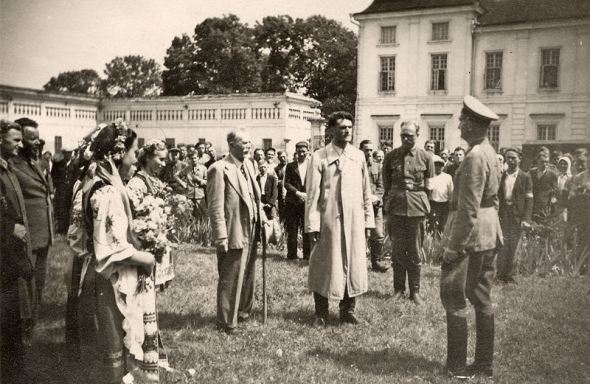
Image below: Weary Ukrainians greet the German Wehrmacht in Western Ukraine in the summer of 1941. Note the women at left in traditional costume carrying flowers. Enlarge Two more photos here (relatives discover victims of NKVD in Lvov on June 30, 1941) and here (murdered ethnic Germans are being identified by their relatives at a Ternopil GPU prison on July 10, 1941)

Weary Ukrainians greet the German Wehrmacht in Western Ukraine in the summer of 1941.
  • Read more about The Wehrmacht War Crimes Bureau, 1939-1945 - part 11
  • 404 views

The Wehrmacht War Crimes Bureau, 1939-1945 - part 12

By carolyn | 4:02 PM EDT, Mon September 28, 2015

Your browser does not support the audio element.

Wehrmacht War Crimes Series_12_9-27-15.mp3 (15.33 MB)

September 28, 2015

Carolyn reads chapter 21, "Katyn" and chapter 22, "Vinnitsa."

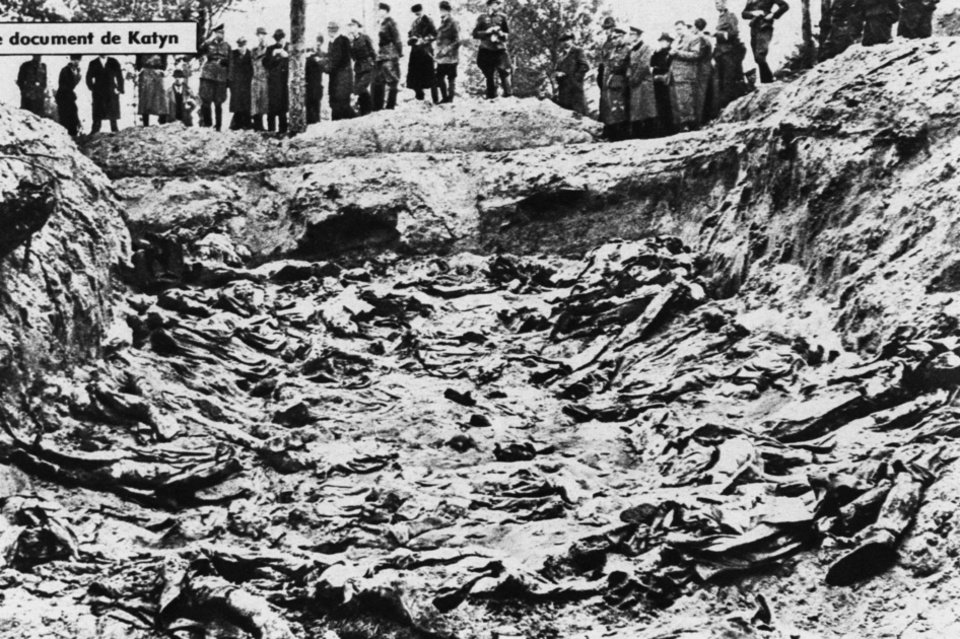
The mass graves discovered in the Katyn Forest in 1943 are the most widely publicized of the political murders and war crimes committed by the Soviet Union from 1937 to 1945, but are just one of innumerable examples from the bloodthirsty regime of Josef Stalin. In the town of Vinnitsa, 10,000 bodies were exhumed from three major burial sites, but more remained in the ground. 1h7m.  Some highlights:

  • At Nuremberg, the Soviet prosecutors tried to indict the Germans for the killing of thousands of Polish officerrs at Katyn, but had to abandon the effort due to the obvious falsity of their case:
  • Details of the U.S. Congressional investigation, which also found the Soviets responsible;
  • Other research, investigations and books exculpated the Germans for the killing of 22,000 Polish military and police officers;
  • In Vinnitsa, the murders of political prisoners held in the NKVD prisons began in 1937-38; rumours of what some had seen taking place were mentioned only in whispers;
  • In 1943, Germans dug up mass graves in three separate locations in Vinnitsa, but had to end the digging when the Soviets reoccupied the area in 1944;
  • International medical committees were formed for both Katyn and Vinnitsa, and found unanimously that the vast murdering took place when the Germans were NOT there, but the Soviets were in control.


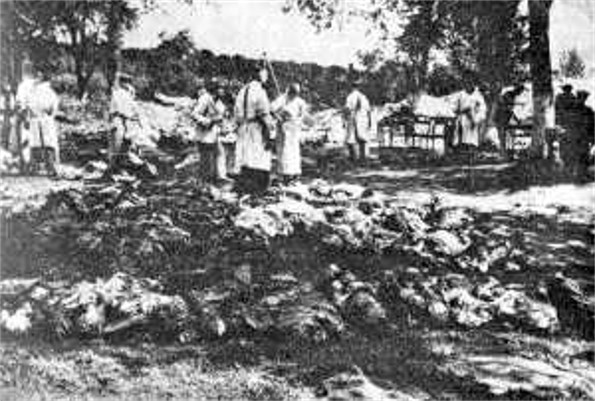
One of the mass graves found at Katyn, Even today the establishment tries not to credit the Wehrmacht for discovering and publicizing this horrendous crime against the Poles.


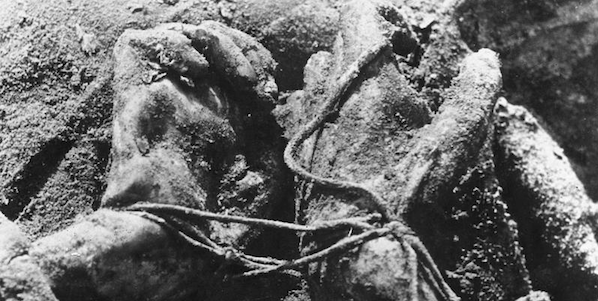
A close up of tied hands of Polish officer.
 International expert investigators studying exhumed victims laid out at one site of the Vinnitsa massacre.
  • Read more about The Wehrmacht War Crimes Bureau, 1939-1945 - part 12
  • 2 comments
  • 536 views

The Wehrmacht War Crimes Bureau, 1939-1945 - Final Installment

By carolyn | 8:58 PM EST, Mon November 02, 2015

Your browser does not support the audio element.

Wehrmacht War Crimes Series_13_11-2--15.mp3 (16.89 MB)

Nov. 2, 2015

Carolyn reads Chapter 23 "Shipwrecked Survivors" and Chapter 24 "Hospital Ships."

Though it is more difficult to investigate the deaths of shipwrecked sailors and air crews downed in the ocean than it is deaths on land, the War Crimes Bureau found clear evidence of crimes by the British during the attack on the Erich Giese destroyer at Narvik, Norway; the Osia Paraskevi caique in the Aegean Sea; and on paratroopers traveling by caique to western Crete. The shooting of downed German airmen in the Channel during the 1942 Battle of Dieppe, France, and in the Mediterranean in 1944 were also crimes by some British RAF pilots.

The investigation of the November 1944 attack which sank the German hospital ship Tubingen in the Adriatic Sea is discussed in detail, but  far less attention was given to the frequent British attacks and bombings of the smaller German hospital carriers. The Soviet Union unilaterally refused to recognize any German hospital ships.

This ends the reading of this very important book – the only one of its kind, as far as I know, that gives exposure to the German Military's professional investigations into the war crimes committed by the Allies against German soldiers. 1h14m
 

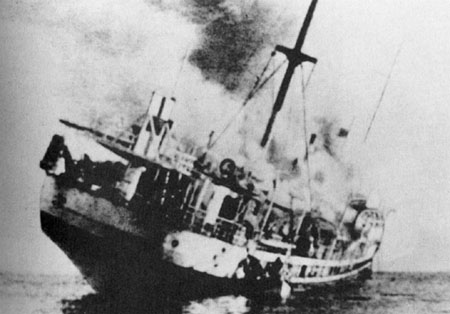
The Tubingen hospital ship  going down after being attacked by British RAF pilots on 18 November 1944 while crossing from Bari to Triest in the North Adriatic Sea. The responsible pilots were not prosecuted. 
  • Read more about The Wehrmacht War Crimes Bureau, 1939-1945 - Final Installment
  • 2 comments
  • 545 views

Student's feeling of sadness at German Stalingrad soldier's grave sets off furor in Russia

By carolyn | 11:28 AM EST, Wed November 22, 2017

By Carolyn Yeager

IN LIGHT OF MY PREVIOUS POST: Advice-giving White men who think Germans should get off their knees and stand up to the world again should actually be asking the rest of the world to lay off the “Nazis” instead. And do they? It's they, too, who won't stop contributing to the unfair defilement of Germany's past.

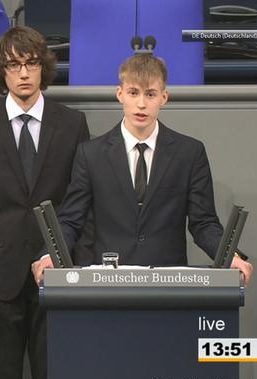
An illustration of this cropped up when a Russian high school student, part of a joint German-Russian school project on the fates of military prisoners on both sides in WWII, spoke in the German Bundestag last Sunday on the National Day of Mourning. There were three German students from Kassel and three Russian from Novy Urengoy (in Siberia). Above right: Sixteen-year-old Nikolai Desyatnichenko gives his short speech in the Bundestag on Sunday, Nov. 19.

  • Read more about Student's feeling of sadness at German Stalingrad soldier's grave sets off furor in Russia
  • 15 comments
  • 1250 views

Problems listening to podcasts

By carolyn | 1:35 PM EDT, Wed June 19, 2019

I HAVE MANY ARCHIVED PODCASTS STORED here under "Radio Archives" on the sidebar.

Sometimes I hear from a listener who is having problems when using the players. What commonly happens is the player will play for a few minutes and then shut off, or sometimes restart at the beginning again, never getting past a certain length of time. I often have this problem myself.

  • Read more about Problems listening to podcasts
  • 4 comments
  • 1049 views

My Articles

  • Early Articles
  • The Third Reich
    • Hans-Ulrich Rudel: The man who might have been the next German Führer
    • The Search for WWII Mass Graves
    • The Fake Legends of Adolf Hitler’s “Jewish Grandfather”
    • Latest expression of virulent Jewish hatred: Hitler's parents' grave destroyed
    • The Gleiwitz “False Flag” Incident is Pure Fiction
    • Nuremberg hangman was a U.S. Navy-diagnosed psychopath who slowly strangled top Nazis
  • Heroic Women
    • Hanna Reitsch – warrior of flight and freedom
    • The Mothers Movement - Agitating Against American Involvement in World War II
    • Florence Rost Van Tonningen
  • Holo Frauds and Quacks
    • Zisblatt: A Special Jewel
    • "Diamond Girl" Fiction
    • Second Response to J. Neander
    • Denis Avey: Man Who Would Be Righteous
    • Avey, BBC ,and British Government
    • Why BBC and Labour Backed Avey Hoax
    • Pedophile Promotes Denis Avey Hoax
    • The Shadowy Origins of Night
    • Elie Wiesel and the Mossad, Part 1
    • Elie Wiesel and the Mossad, Part 2
    • Elie Wiesel and the Mossad, Part 3
    • Elie Wiesel and the Mossad, Part 4
    • Septuagenarian’s “Holocaust” memories dangerous to youth, wrong as history
    • “Child survivor” Paul Argiewicz and the missing five years
    • Time to call Ken Waltzer a fraud?
    • Max Hamburger Says He Is the ‘Zombie Man’
    • Naftali Fürst claims to be in Famous Buchenwald Photo as a 12-year-old boy
    • Martin Gray: Another Polish Jew surlievor*
    • Yehuda Bacon memoir at Elie Wiesel Cons The World
    • History teacher who outed holocaust fraudster Joseph Hirt calls for apology or prosecution
  • More Holocaust Revisionism
    • Jewish population figures don't add up
    • My response to Alan Dershowitz's essay “The origin of fake news in holocaust denial” published at Gatestone Institute
    • Hungarian Deportation: An Objectivity Lesson
    • Thoughts on the Jewish Problem and the HoloHoax
  • World Jewish Congress
    • Fake Documents Supporting Auschwitz Hoax
    • The Hoax that won't die
    • History of the World Jewish Congress
    • Critic: It's not just the Jews
    • Circular Reasoning and the Holocaust
  • Special Treatment for Jews
    • Stop Special Treatment for Jews – a way forward
    • New Jersey authorities expose Jewish welfare fraud
    • How Orthodox Jewry is robbing an American town
    • Religion is key to Lakewood's 'special treatment' for Jews
    • New Jersey rabbis face prison in kidnapping conspiracy
    • Explosive growth of the ultra-Orthodox community in Lakewood
    • Lakewood's woes: Jews create chaos in Gentile societies
    • Lakewood Orthodox welfare cheats offered amnesty
    • Large Orthodox Jew families are an unfair burden for schools
    • Rapid growth of Orthodox population creating havoc in NY-NJ
    • Orthodox clinic owner steals $7 mil from Medicaid
    • Mosberg indicted in 2008 on corruption, bribery charges
    • New Jersey town's losing battle to prevent Orthodox Jewish takeover
    • Seven NY Orthodox in $14 million scam to steal school money
    • Brooklyn clinic owned by Orthodox Jews investigated for vaccine fraud
    • Fox News on problems Hasidic Jews bring to U.S. communities
  • Movement Controversies
    • Kevin MacDonald on record saying whether the Holocaust actually happened is “not important”
    • Greg Johnson echos Kevin MacDonald in opposing 'Holocaust' revisionism - One must ask why
    • Everything Greg Johnson knows about Holocaust Revisionism he learned from Mark Weber
    • The Unforgivable Sins of Mark Weber
    • The Goebbels-Vlasov-Irving Question
    • The Goebbels-Vlasov-Irving Question, Part 2
    • The Rise and Fall of Tribal Administrator Rodney Martin

Ein Anderer Hitler

  • The Battle of the Architects
    • Giesler on Speer: The Battle of the Architects
    • Battle of the Architects, Part 2
    • Battle of the Architects, Part 3
    • Battle of the Architects, Part 4
    • Battle of the Architects, Part 5

Buy this book here or here

Wenger Family Archive

  • Willy Wenger's Writings
    • Childhood
    • The great hope: The German Reich
    • Referendum of April 10th, 1938; 1939 & the Napola School
    • The Odyssey of Fahnenjunker Wenger (part one)
    • The Odyssey of Fahnenjunker Wenger (part two)
    • Albin's Story
    • The Final Flight of Poldi Wenger - April 10, 1945
    • The Passing of an Era – Remembering Willy Wenger 1926-2017
  • Leopold Wenger
    • Hitler Youth
      • Out and About on the Bicycle 1936-37
      • Great Ride to Nuremberg for 1937 N-S Party Convention
      • The Days of Our Revolution 1938
    • Napola Letters
      • April-May 1939
      • May-June 1939
      • July-November 1939
    • Wartime Service
      • Letters from Nov. 1939-April '40
      • Letters from April-Dec. 1940
      • France: January-April 1941
      • France, May-December 1941
      • France, February - July 1942
      • France, July-December 1942
      • France, January-June 1943
      • Sicily and Lake Constance, June-Nov. 1943
      • Eastern Front, Nov 1943-Feb 1944
      • Ukraine-Bessarabia, March-June 1944
      • Last letters from Eastern Front, Aug. 1944-Jan. 1945
      • A close encounter between wartime rivals only revealed 74 years later
  • Wenger Family Archive Index

The German Reich

  • Hostility towards Germans
    • The Anti-German Narrative in the West
    • German Self-Hatred and Leftist Ideology
    • White Guilt and Islamic Chauvinism
    • Britain's 100 year war against Germany
    • Searching for the roots of persistent anti-Germanism
    • Final Interview With Erich Priebke
    • Interview: Horst Mahler on the German Reich
    • Interview: G. S. Viereck's 1923 interview with Adolf Hitler
    • Odeonsplatz: Interview with Werner Bräuninger
  • Law & Government
    • Kristallnacht
      • A closer look at Kristallnacht 1938 - Jewish hoax?
      • Assassination and terror is the method of Jewish ethnic warfare
      • The Jewish Declaration of War
      • What really happened on November 9, 1938 in Munich
      • Damage from 'Kristallnacht' greatly overstated by world press
      • Psychological warfare operations explain 'Kristallnacht'
      • Ingrid Weckert considers 'Cui Bono?' – Who benefited from Kristallnacht?
      • Pegida-Dresden, Tatjana declares guilt complex over!
      • 75 Years after "Kristallnacht"
  • National Socialism
    • Mein Kampf, vol. I
      • On 'Public Opinion'
      • On 'The Majority Principle'
      • On 'Jewish Democracy' and 'The Importance of the Spoken Word'
      • On Connecting With The Mass and The 'Away-From-Rome' Movement
      • On 'Defects in our Educational System' and 'Concentration on a Single Enemy'
      • On 'Anti-Semitism On a Religious Basis'
      • On 'State and Economy'
      • On 'The Moment of Decay'
      • Adolf Hitler on 'The World War'
      • On 'The World War' part 2
      • On 'The World War' part 3
      • On 'War Propaganda'
      • On Discovering Gottfried Feder
      • On How He Joined the DAP
      • On 'Causes of the Collapse'
      • On 'Causes of the Collapse', part 2
      • On 'Causes of the Collapse', part 3
      • On 'Causes of the Collapse', part 4
      • On 'Nation and Race'
      • On 'Nation and Race', part 2
      • On 'Nation and Race', part 3
    • Mein Kampf, vol. II
      • On the Political Meaning of 'Folkish'
      • On The State, part 1 - Germanization
      • On The State, part 2 – Nature and Purpose
      • On The State, part 3 – Racial Hygiene and Physical Education
      • On The State, part 4 - Needed changes in education
      • On The State, part 5 - Selecting talent over social class
      • On Subjects and Citizens in the National Socialist State
      • On Personality and the Folkish State-Concept
      • On the Early Struggle: Significance of the Spoken Word
      • On Worldview and Organization of the Folkish State
      • On Conflict With the Red Front
      • On Conflict With the Red Front, part Two
      • Why the Strong Man is Mightiest Alone
      • Regarding the Meaning and Organization of the S.A. (Part One)
      • Regarding the Meaning and Organization of the S.A. (Part Two)
      • Regarding the Meaning and Organization of the S.A. (Part Three)
      • The Mask of Federalism
      • Propaganda and Organization
      • The Trade Union Question
      • German Post-War Alliance Policy
      • Germany's Policy in Eastern Europe, Part One
      • Germany's Policy in Eastern Europe, Part Two
      • The Right to Emergency Defense
  • Führer Speeches

Race & History

  • Ancient Aryan History
  • Race in Civilization
    • The Importance of Race in Civilization
    • Why are you obsessed with race? What is your agenda?
    • The Racial Awakening of the German People by Dr. Rudolf Frercks, parts 1-3
    • The Racial Awakening of the German People by Dr. Rudolf Frercks, parts 4-8
    • The Racial Awakening of the German People by Dr. Rudolf Frercks, parts 9-10
  • World War I
    • The Fatherland
      • The Fatherland weekly covered The Great War in Europe from a German-American perspective
      • Lying during war: A sampling from “The Fatherland”
      • Who were the lawbreakers? Who were the liars?
      • Further reports on criminal treatment of German-Americans by England
      • Did you know? Excerpts from “The Fatherland” reveal insights into Great European War
      • The state of American neutrality in February 1915
      • An essay on English transgressions vs the will of Providence
      • Did the US-UK alliance against Germany-Austria begin long before 1917?
      • The Lusitania tragedy turned into pretext for US to enter war
      • Striking examples from The Fatherland that support the One War thesis
      • In September 1915, German-Americans still perceived as lesser Americans
      • Why the Money Trust wanted war: The British "Gold Plot"
      • More on the Money Trust—The American Pilgrims Society
      • The Brussels documents and the heresy of Woodrow Wilson
      • In 1916, Wilson Administration drops façade of neutrality; attacks German Americans
      • Henry Ford and Cecil Rhodes, on opposite sides, make news in The Fatherland
      • An Exchange of Letters bearing on the British Ideal of Cecil Rhodes
      • America moves closer to war; Wilson unhappy with conciliatory German Note
      • Outnumbered German Fleet bests the British in the great Battle of Skagerrack
      • Political parties choose their 1916 nominees: Hughes and Wilson
      • The submarine Deutschland makes surprise visit to America!
      • The Kaiser answers his American attacker
      • Zeppelins strike fear in English towns and ports
      • Wilson's reelection advances Anglo-American alliance against Germany
      • 'The Fatherland' exposes ruthlessness of US conduct of Philippine War under Germany-critic Elihu Root
      • More revelations of Anglo-American crimes as condemnation is heaped on Germany
      • Wilson addresses Senate; proposes Monroe Doctrine 'for the world'
      • Talk of peace in January 1917 raises hopes, proves deceptive
      • Little hint yet of dramatic events about to break
      • Wilson breaks relations with Germany; 'The Fatherland' takes new name
      • Final installment from The Fatherland—Germany enforces total U-boat blockade
  • World War II
  • Hitler and the Slavs

Women & Family

  • Five Race Conscious Women
  • For and About Women
  • Health
  • Heroic Women
  • Home Schooling
    • A Family Mission Statement
    • Home Schooling News
    • Top 100 homeschool websites
    • The Salina, Kansas Exam
    • History for Kids
  • Links to Other Motherhood Articles

Art & Culture

  • Art News
  • Carolyn's Ancestry
    • History of Sant Anna
    • My DNA results
    • This is Larry Kahant

JAN27
International Day of Commemoration in Honor of the Revisionists Who Introduced Sanity to the Auschwitz “Death Camp” Narrative
 

User menu

  • Log in
  • Reset your password

Copyright © 2026 Company Name - All rights reserved