

From the Handbook for Schooling the Hitler Youth
Chapter Eight: The German Population Area (Handbook online is here)
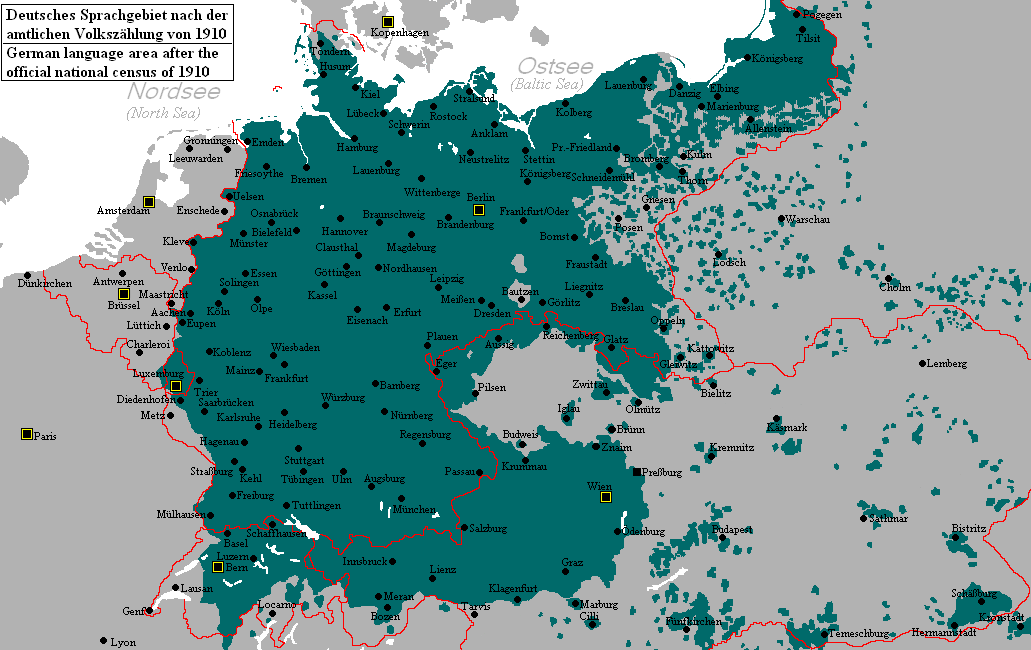
The following has been edited for greater brevity -cy
Our earliest forefathers were the Norsemen of the early stone age (2500-1800 B.C.). After the ice had worked its way back onto the mountains, the Norsemen descended into the western regions along the East Sea (Baltic Sea). For many thousands of years they dwelt in southern Sweden, in Denmark, and northern Germany.
The Norsemen developed a high agrarian culture. They knew husbandry, cattle raising and seafaring. They set up permanent monuments to their dead, dwelt in high gabled houses similar to our farmers today, formed vessels and tools out of wood, knew how to tan the finest leather out of animal hides. Their artistic sense was highly developed, showing itself clearly in beautiful stone weapons, the dagger and the battle axe.
The Norsemen of the early stone age were energetic, well developed men of the Nordic and Phalic races. They multiplied rapidly so that a time came when their arable land was no longer sufficient for all. The youth had to go forth to acquire new land, following every direction under the sun. They settled in neighboring and far distant regions inhabited by foreign races, often mixing with the natives and forming new peoples such as the Celts and Illyrians. In some cases, they acquired new territories and created there as Indo-Iranians, Greeks and Romans the highly developed cultures of antiquity. The cultural values and racial traits of the Norsemen were spread throughout Europe thereby, evident today in the languages of most European peoples. Science has grouped these people together under the name of Indo-Germans. (See chart 17 in online text)
The culture of Europe, and particularly that of antiquity, does not come out of the east but the north, and to a considerable extent on German soil. At the conclusion of the Indo-Germanic wanderings the Nordic and Phalic Norsemen united to form a people unified internally and externally: the Germans.
The Bronze and Iron Ages
The bronze age (1800-800 B.C.) brought German culture to a flourishing state, which included their first acquisitions of land on the continent. Land cultivation, animal husbandry, and seafaring experienced a great upward swing. Objects of use and weapons were created out of gold, amber and bronze (the first metal). Fighting and sports were encouraged on all sides; music and art also flourished. The bronze age gave rise to the golden age.
Spring floods along the coast of the North Sea produced a great need for land. Constantly struggling with their neighbors, they spread out, pushing across the Weser and Oder. By the end of the bronze age they had reached the lower Rhine in the west, the mouth of the Vistula in the east, and the mountain ranges of central Germany in the south. (see chart 18 in online text)
The iron age (800-50 B.C.) followed the golden age. It's name is not derived solely from the new material, iron, that came into use but also because it was an age full of fighting and tussling for new land. Even so, the handicrafts, especially the art of forging, blossomed forth, to which new weapons, swords, daggers and spears bear witness. The raising of horses and building of wagons attained a high degree of perfection, making for great advances in farming.
Once again, youth was forced to stride out after new land. A climatic disturbance in the western part of the East Sea region caused a food shortage. In long trains the heavy wagons of the peasants rolled out of the homeland. In great battles and continual fighting the young peasants were obliged to force their way into new lands. The greatest expansion took place toward the east. The Germans pressed across (now) East Prussia, the interior of (now) Poland, and southward along the rivers as far as the Black Sea. Because their numbers were so diminished from the battles, many were absorbed by foreign peoples. In consequence of this great expansion the German people assumed the form of numerous branches which we classify as North Germans in Scandinavia, east Germans east of the Elbe, and west Germans to the west.
Roman Empire and the heroic age
The age of the Romans (50 BC.-375 A.D.) is replete with countless struggles of Germans with the Roman Empire. The splitting up of the German people into branches now proved to be especially disadvantageous. Nevertheless the Romans were unable to conquer the core of the German territory, the Germany of today. In the great and decisive battle in the Teutoburg Forest (9 A.D.) the west Germans under the leadership of Armin were victorious over a powerful Roman army.
In the east of Germany, a powerful expansion took place once more. East Germans, Goths and Gepidae pushed out from the region between the Vistula and the Memel across Poland toward south Russia to the Black Sea and the lower Danube. The East Goths and West Goths were able to form great empires that withstood the onslaughts of the Romans. The Marcomanni forced their way into the territory of the Sudetens and established an empire. By the end of the Roman period, the Germans had taken possession of all the land between the Urals, the Black Sea, the Danube and the Rhine.
The period of Germanic migrations (375-1000 A.D.) is the heroic age of the Germans. The invasion of Mongolian hordes from the far distant steppes of the east set the east Germans into motion. After tough assaults, they turned westward and streamed into the Roman Empire which fell to pieces under this onslaught. Some of the Germanic branches succeeded in winning new land out of the territory of the old Roman Empire and in building up great kingdoms beneath the southern sun. The Vandals erected an empire in north Africa, the west Goths in Spain, the east Goths and Lombards in Italy, and the Burgundians on the soil of southern France. But because the Germans constituted only a thin layer of leaders above the older peoples, they were gradually extirpated in the course of constant strife. (see chart 19 in online text)
Some centuries later, the north German branch of Germanic peoples poured out over Europe—the Normans, Vikings and Varangians. They pushed to the Mediterranean, established states in southern Italy and in Antioch, in northwestern France and southern England, and even to the Black Sea, appearing in Byzantium, the capital of the eastern Roman Empire. Whereas the Roman Empire had not pushed beyond the limits of the Rhine and Danube and did not include all of Central and eastern Europe, the Germans flooded Europe from the Urals to Gibralter, from the North Cape to Constantinople. Europe, as a cultural and spiritual unity, is therefore the work of the Germans.
One of the west German branches founded an empire in western and central Europe. About the year 900 this empire split into an eastern and western empire. From the eastern empire emerged the German Reich. Its eastern boundaries extended along the line of the Elbe-Saale-Bohemian Forest-Enns. It's western limits finally settled into following the line separating Germans and Romans. During the succeeding centuries the branches of the Eastern Empire—Frisians, Saxons, Frankonians, Thuringians, Swabians and Bavarians—merged to form the German people. The greatest accomplishment of the German people was the winning back, during the middle ages, of the eastern territory between the Elbe and the Vistula.
The Slavs
After the westward migration of the east Germans, Slavic tribes pushed their way into this territory. They shared the land with the hardy remnants of Germanic settlers who had remained on the land. The colonization movement continued [too much to put into this post -cy] and the Bavarian successes cleared the way to Italy. Thus the oldest settlement of the Reich came into being: the Austrian, Styrian, Carinthian and Krain districts. They have remained for all times the southeastern outposts of the Germans. After the Bavarian Babenbergers died out in 1156, the new districts were separated from the Bavarian motherland as independent duchies.
When the Saxon Emperor Otto II suffered a defeat in Italy and, in consequence of incessant fighting around Italy, the Reich became weak, the Slavic tribes revolted in 982 in order to shake off the hated German overlordship. The German towns and settlements along the frontiers of these districts were destroyed and all the Germans massacred. Only with the greatest difficulty was it possible to bring the onslaught of the Slavs along the Elbe to a halt.
After this crucial insurrection the Elbe remained the frontier toward the east for almost 200 years. However, during this period the German population increased considerably, the soil could no longer provide for this increase and the procession of the German peoples toward the east began. The princes of the German frontier lands put themselves at the head of the movement, thereby assuring the success of German colonisation on that side of the Elbe. The protection of the German princes was all the more necessary in as much as the Slavs interposed bitter opposition to the onward march of the Germans. The sword had to clear the way at first. (see chart 20 in online text)
In the following years, complete Germanisation of Bohemia and the Sudetenland was hampered by many factors, including the settlements of the Czechs. [I'm skipping four paragraphs that present this period in more detail, which you can read in the original text at Archive.org -cy] Although Bohemia belonged to the German Reich (actually Austria) up to the World War, it was never possible to bring about complete Germanisation. A deep wedge has been driven between the northern and southern regions of the German population area hindering the development of a unified German front on the east.
The winning of Silesia and Pomerania followed a more peaceful course. The Slavic dukes of these regions asked German peasants and settlers onto the land. By the 13th century both of these lands could be added to the German Reich and attached to the German population area, and thus the area about the Oder was completely Germanised. The Poles, settled along the Vistula, laid aside their paganism and became subject to the Archbishopric of Magedeburg. In the year 1000, under the religious enthusiast Kaiser Otto III, the Poles received their own Polish national church, becoming independent politically and culturally thereby. Thus the Germans were forced to follow the shores of the East Sea and leave behind this standing threat on their flank.
The German Order of Knights
The recovery of the region east of the Vistula (today's East Prussia) was the work of the German Order of Knights. After 50 years of bloody fighting, the Order overcame the opposition. The Order drew German peasants and manual workers into the country, gave them land and protected them from hostile attacks. About the year 1300 the Order's power reached its high point.
The colonisation of the Baltic lands situated to the north of East Prussia by the Order of the Brothers of the Sword was more difficult. The long sea journey necessary discouraged Germans from going there. Consequently, settlement was confined principally to the cities, strengthened by Hansa merchants in Bremen, Lübeck and Lüneburg. In the course of time, Poles and Lithuanians united in the struggle against the Germans. There resulted the terrible defeat at Tannenberg in 1410. The Order of the Brothers of the Sword was completely driven out of the Baltic provinces and only the land around Marienburg was left for the Knightly Order of the Cross. But East Prussia was German and remained German, although for some decades it remained a Polish fief under the overlordship of the Polish Crown.
A period of decline of the German Orders ensued; the march toward the east came to a halt. What the Germans had built up by blood and toil was exposed to the onrushing flood of Slavs. Only after Brandenburg-Prussia rose out of the ruins of the Thirty Years' War did a new power appear: the Great Elector, the soldier king Frederick I rescued East Prussia from the feudal domination of the Poles and attached it firmly to Brandenburg. His son Frederick the Great (II) offered for the first time a strong united German front in the northeast and won back the bridge to East Prussia. This resulted in the first partition of Poland in 1772, and by the third partition of Poland in 1793 Posen, Thorn and Danzig fell into Frederick's hands. The compact German population area was again united under German rule.
For more than 500 years, therefore, Mecklenburg, Pomerania, East and West Prussia, Silesia and Sudeten Germany and German Austria were to be listed as part of the German population area. All branches of the German people won back these territories which comprise almost one-half of the present German population. This was largely accomplished by a cultivation of waste and unproductive districts by German peasants and townsmen who had been called upon by princes, nobles and clergy. German work and German achievements alone transformed these districts into cultural areas. Out of this fact arises a justifiable claim on behalf of the German people for these regions.
* * *
Listen to my podcast with Sven Longshanks discussing this series from the "Schooling the Hitler Youth" Handbook.
- 1160 views
Comments (9)
Glad to see you are still alive
eunuch
Haven't been here in a while. Good to know you are still alive & blogging .
Welcome back -
carolyn
Haha - yes, I also know I'm still alive because I keep blogging.
Germans population in Europe.
David Westerlund
Your many words made no mention of the jew problem and the jews being driven out of Germany many times. AND today they rule Germany.
No, the Jews don't rule
Gilson
No, the Jews don't rule Germany.
Out of the 613 MPs in the Bundestag not a single one is Jew!
Wasn't there one German-Jew
P-K
Wasn't there one German-Jew politican open gloating about how the "Nazis" don't breed very well? I've forgotten his name. It wasn't long ago.
Eitherway, we must come to terms with the fact that the 99.99% are not Jews. But they are perhaps "Jews of the mind" - for they believe the Allied fables told to them, is it not so?
P-K - In Germany, the
carolyn
P-K - In Germany, the horrible plague of leftists (communists, anarchists, proponents of race-mixing, German-haters, non-Germans, globalists and fanatical environmentalists) makes one think one is surrounded by Jews -- yes? Many are Jews but not as many as one might think. In some cases, a Jew can be better than one of these, and more patriotic!!
I just remembered the cretins
P-K
I just remembered the cretins name: Gregor Gysi.
Of course, the same could be said for all other western countries, no? Most politicans are not Jewish, yet they seem to kowtow to the aforementioned forces. "Controlled" - no I think not, but a partnership of mutual interests.
Germany seems from time to time cozy with Israel too, are they just trying to "do a Putin" (Professor Seyed Mohammad Marandi thesis) and curry favour with the States? What are the driving forces exactly other than Germany being held hostage to a twisted history?
It's said that the Jews "came out" during the Clinton administration in the USA, so perhaps some people expect it to the be the same everywhere. Just because they're not seen, doesn't mean their lobbies are not powerful.
Gilson - It's hard for me to
carolyn
Gilson - It's hard for me to believe there are no Jews in the Bundestag. You may think that because it's against the law in Germany to state whether a person is Jewish or not. In Germany, everyone pretends that being a jew is not different than whether you're Catholic or Protestant.
You're mistaken about my words
carolyn
You are very mistaken, Dave. These are the words of the Handbook for Hitler Youth from the 1930's -- NOT MY WORDS. Although I do edit it to make it read more smoothly and shorten it. Did you go to the linked Handbook given in the text or just look for the word 'Jew?'
I think Hitler and the producers of the Youth material knew what they were doing. It may surprise you that in Germany they were not talking about Jews all the time! The National Socialists mainly talked about Germans and what could and would be achieved for the German people.