
The state of American neutrality in February 1915
By Carolyn Yeager
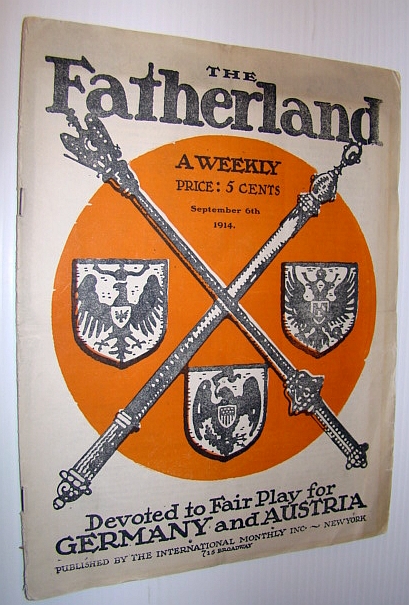
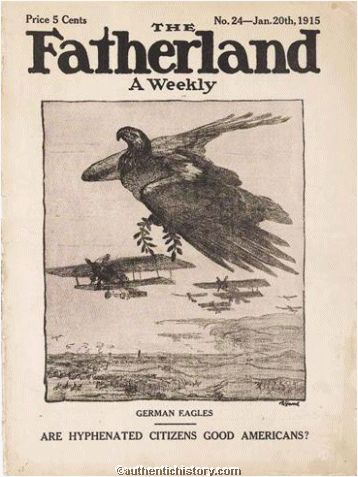 THESE FIRST FOUR ITEMS COME FROM the No. 26 issue of THE FATHERLAND newspaper, [No. 24 shown at left] meaning that after 26 consecutive weeks it was still going strong. Also going strong was discussion of the United States-declared 'Neutrality' in regards to the war raging in Europe. We know today that U.S. neutrality was a sham, but at the time those Americans who were not pro-England or pro-Russian were struggling to bring attention to the situation.
N.Y. Staats Zeitung editorial, January 25, 1915
“On Our Knees to England”
"IN a letter to United States Senator Stone, but intended for general consumption, Secretary Bryan has undertaken to justify the attitude of the administration toward the warring nations and to reply to the attacks which have been provoked by the attitude of the Government on this subject. It is well that the letter bears the signature of Mr. Bryan, as otherwise it might have been assumed that it had been composed in London, or the British Embassy in Washington, except that British diplomats would probably have gone about it with more skill and discretion than our Secretary of State...."
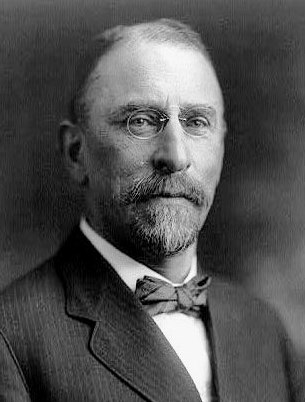 Ashkenazi Jew Henry Morgenthau Sr. (left) was part of Woodrow Wilson's administration in the important role of Ambassador to the Ottoman Empire at the time it was allied with Germany and Austria-Hungary … and his son, Henry Jr., became Franklin Roosevelt's Treasury Secretary (1934-45). Both were Democrat Party administrations. Grandchildren of Henry Sr. include Robert M. Morgenthau, District Attorney of Manhattan for 35 years and 'Pulitzer-prize-winning' historian Barbara W. Tuchman. THE FATHERLAND raises an interesting question about Amb. Morgenthau in 1914. -cy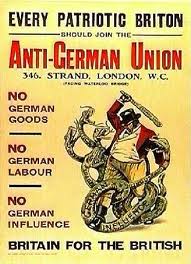
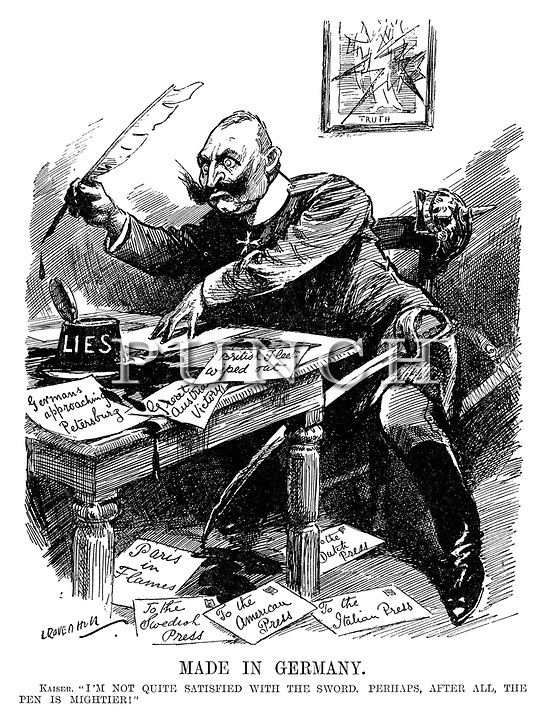
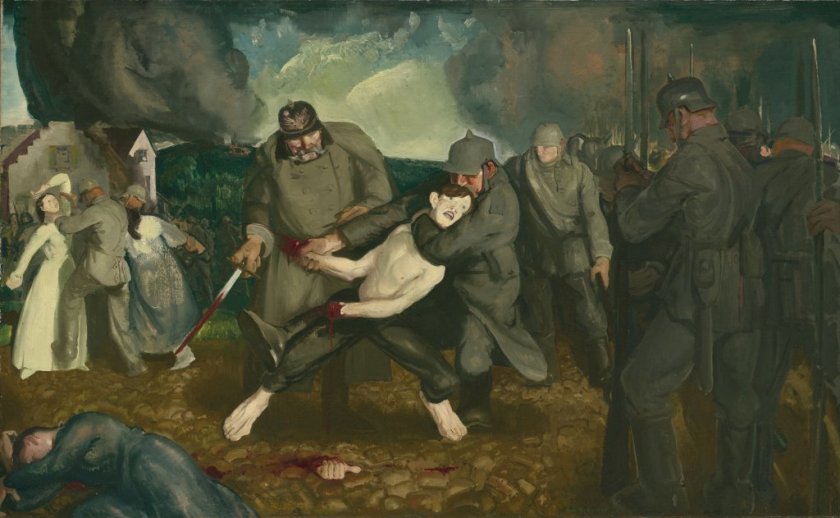
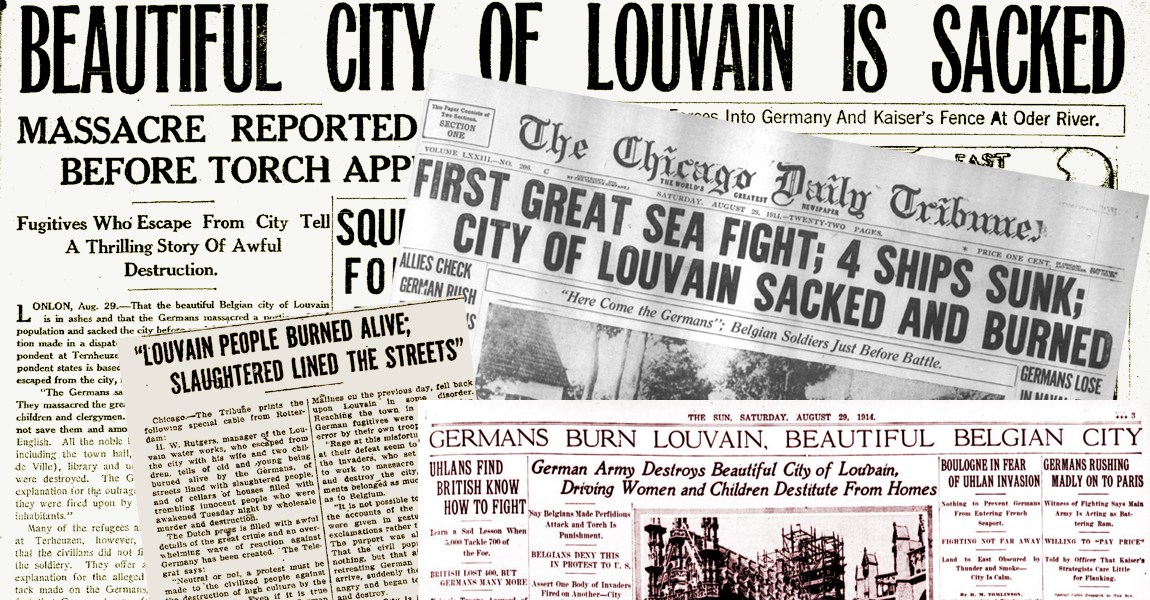
 MOST HAVE LEARNED BY NOW that the descriptions of atrocities carried out by German soldiers on Belgian and French civilians in the opening weeks of the Great European War were not true, were in fact British lies happily repeated by the press. But they were believed at the time, and these fictional atrocities were of the most gruesome kind—chopping off the hands of children, raping and bayoneting women, burning down churches and other buildings after locking civilians inside. The American newspapers carried these stories and a great many people believed them. It wasn't until after the war was over that Britain began to admit, under pressure of evidence to the contrary compiled by the German Foreign Office, that they were propaganda lies designed to gain the sympathy, and arouse the indignation, of the public—and most especially the Americans. However, there was never an official apology or correction.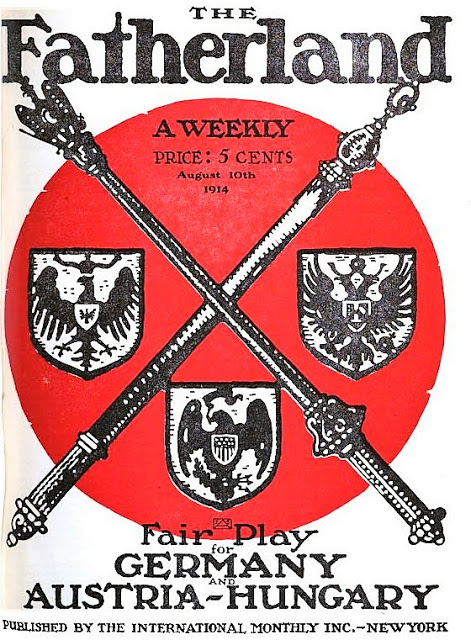
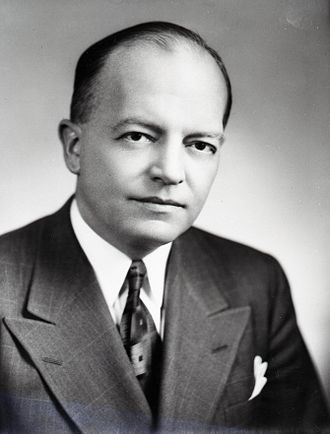 Governor Harold Stassen (left) had been the keynote speaker at the
 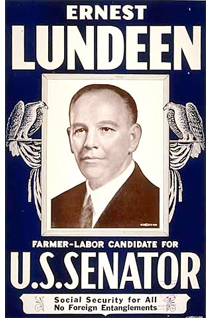 MY FRIEND WOUTER SENT ME THE ARTICLE BELOW ABOUT ERNEST LUNDEEN, an American “isolationist” politician from Minnesota who had a fair-minded and truth-seeking attitude toward the German-Polish conflict and the war of September 1939. Through Lundeen, I've learned about a couple others who are also of particular interest to me.