

Leopold Wenger's first letters from Napola Köslin, April-May 1939

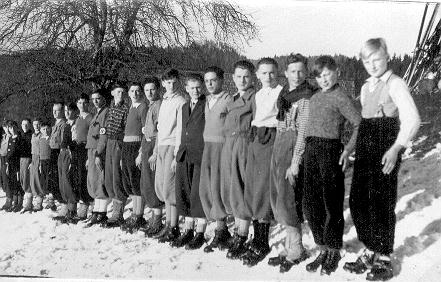
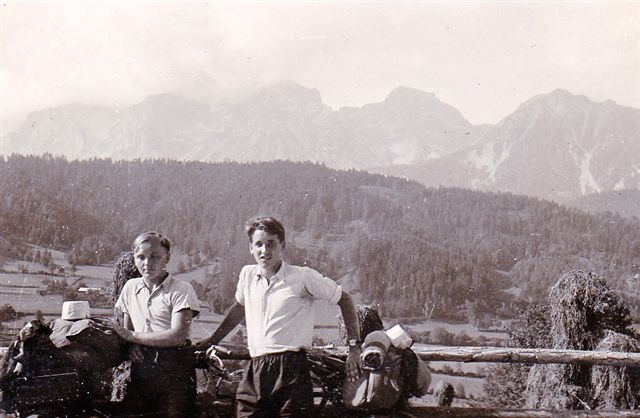
Background: Leopold Wenger and his best friend Gilbert Geisendorfer read in a newspaper that there were openings for young men in the National Political Educaton Institute at Köslin in Pomerania. They talked about it and decided to apply. Together, they reasoned that if they did not pass the entrance exam the world would not end and they would have seen Berlin, the capitol city of the Reich.
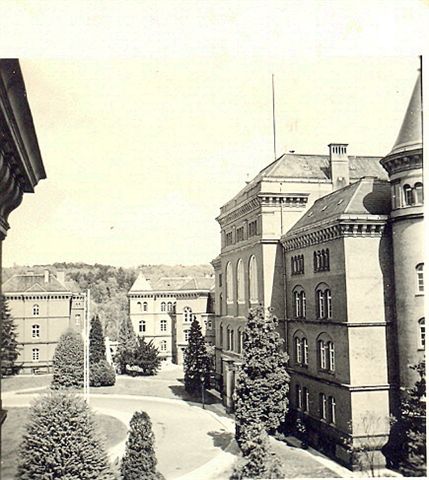
They traveled by train from Leoben to Berlin-Potsdam, where the evaluation and testing took place. Both did pass and were then transported from Potsdam to their new school at Köslin. Leopold was 18 years old at this time. In the following letters to his family, he describes his first month in this new and different environment. More of his letters, up until November 1939, will be posted here as they are translated.
copyright 2013 Wilhelm Wenger and Carolyn Yeager
Translated from the German by Wilfried Heink
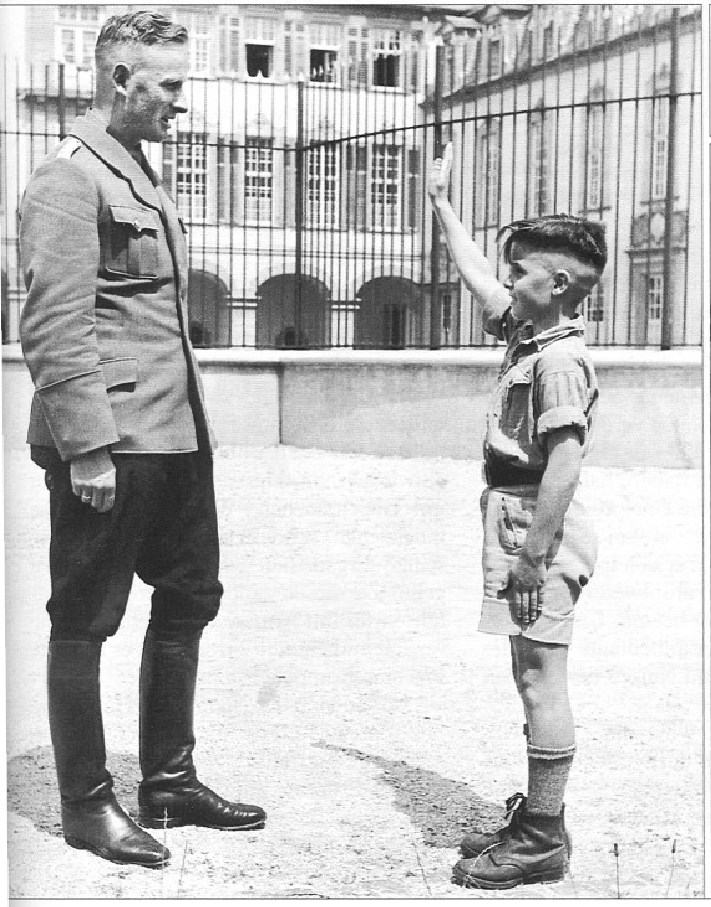
Letter of April 20, 1939: Based on my excellent performance in science and sports, I was admitted to NAPOLA (National political education program) in Köslin. Only 230 of the 800 applicants were admitted for testing; 60 youngmen (jungmännen) were selected for grades 7 and 8 and, because of my test results, I was accepted into grade 8 even though I had never completed grade 7.
The tests were not what I had expected. They were regular classroom lessons and each one of us was evaluated based on performance. High-ranking SS officers were present, as well as a General of the Luftwaffe. Medical examinations were performed three times: a general assessment; fitness for flying (a turnstile and a catapult); and suitability for the SS (racial).
I travelled to Berlin a few times and was able to visit the Garrison church in Potsdam, the grave of Frederic the Great as well as the castle Sanssouci. On the 18th we drove to Berlin via the Avus, then on the Autobahn to Stettin [close to the Baltic Sea], and to Küstrin, and our new home.

 Adolf Hitler’s 124th birthday is celebrated with proof of his
 Established French Revisionist