My Ancestry
My Ancestry
Here is a brief version of my ancestry from the research and compilation by Alf Kuehrt of Nuremberg, Germany for the publication Famlienbuch Sanktanna which he updates every year.
There are 363 family names in the current (2014) 2-volume book, all but 62 of them German. Kuehrt devised a numbering system that allows one to easily find the parents and marriage partner of each person born in Sanktanna, thereby one can discover all the inner-family connections, and maybe a few surprises!
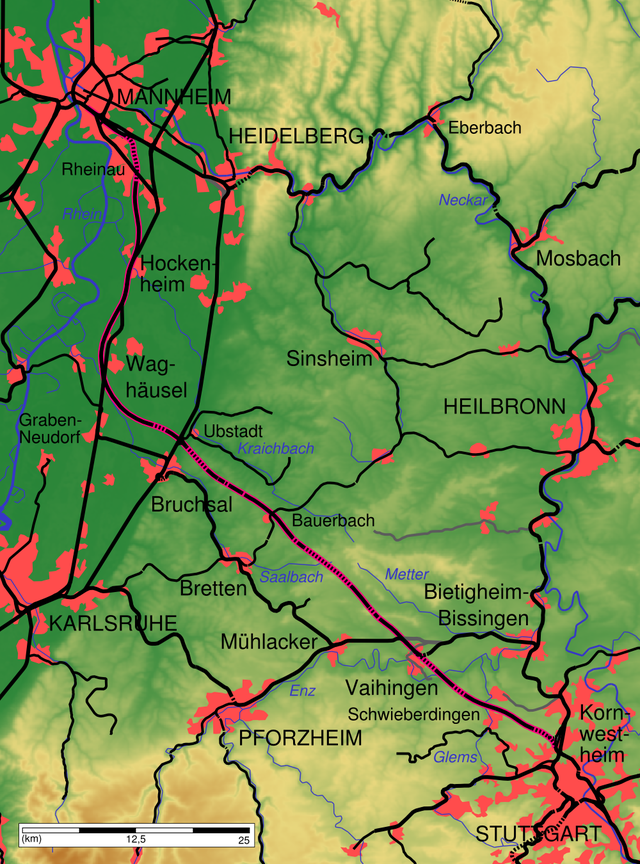
I would like to take my ancestry further back in Germany. A majority of the first families to arrive in Sanktanna (St. Anna) came from the Kraichgau in Baden, a fertile area between Heidelberg and Stuttgart. The Reck family did come from Bauerbach in the heart of the Kraichgau, which is north-northwest of Stuttgart. Enlarge map. Please check out my radio program "In Praise of My Ancestors". I hope to find out more still about my German roots whom, I am pretty confident from the information I have, all traveled to Sanktanna from the Kraichgau or very close nearby areas in Baden. The names of these men and women going back 6 to 7 generations is enough to show that I am German through and through. Following these genealogical lists from my grandparents back, you will find a little bit about the German town of Sanktanna, written by Herr Kuehrt.
Subject: Carolyn E. Yeager
PARENTS: Stephen A. and Barbara J. (Schillinger) Yeager (both born in Illinois, USA)
Stephen's Parents (my grandparents}
Steve Yeager (born Stefan Jäger, 1890) and Barbara Anna Schmidt (born 1891) in Sanktanna, Hungary, a German-settled village. They married in 1907 in Illinois.
Further Jäger line
Stefan Jäger (b1855) married Theresia Bleiziffer in 1879 (2nd gdpts)
Josef Jäger (b1824) married Katharina Müller in 1848 (3rd gdpts)
Johann Jäger (b1798) married Barbara Englehardt in 1823 (4th gdpts)
Johann Jäger (b1769) married 1) Maria Elisabeth Göttler in 1792; married 2) Katharina Raab (mother of Johann Jr) in 1796 (5th gdpt)
Further Schmidt line
Michael Schmidt (b1859) married Theresia Totterer in 1883 (2nd gdpt)
Anton Schmidt (b1833) married Theresia Emeneth in 1852 (3rd gdpt)
Michael Schmidt (b1804) married Katharina Scham in 1824 (4th gdpt)
Josef Schmidt (b1784) married Franziska Abfalter in 1803 (5th gdpt)
Sebastian Schmidt (b1740) married Rosalia ? (b1738) (6th gdpt)
Barbara's Parents (my grandparents)
Anton Schillinger (born 1883) and Barbara Reck (born 1884) in Sanktanna, Hungary. They married in 1906 in Illinois.
Further Schillinger line
Anton Schillinger (b1844) married Anna Bleiziffer in 1871 (2nd gdpt)
Franz Schillinger (b1812) married Anna Daminger in 1835 (3rd gdpt)
Josef Schillinger(b1774) married Rosalia Brunner in 1797 (4th gdpt)
Franz Schillinger (b1740) married Katharina Vogel in 1767 (5th gdpt)
Further Reck line
August Reck (b1853) married Barbara Hell in 1882 (2nd gdpt)
Franz Reck (born 1813) married 1) Anna Eckstein in ?; 2) Theresia Schauer (mother of August) in 1852 (3rd gdpt)
Andreas Reck (b1764 in Bauerbach, Germany) married Maria Katharina Silbereis in 1791 in Sanktanna (4th gdpt)
Johann Georg Reck (b1718 in Bauerbach, Baden, Germany) married Barbara Sturn in 1741 in Bauerbach. (5th gdpt) Barbara Sturn is my oldest known female ancestor; she was born in 1722.
A bit of history of Sanktanna (St. Anna)
The settlement in the small hamlet “Komlos” (Hungarian for hop village), 21 km north of Arad, wasn’t begun by the imperial Viennese court, but at the instigation of the Hungarian baron Jakab Bibics, the landed proprietor of the whole region. “Komlos” soon became “Old-Sanktanna” (Hungarian).
Next to it, on the waste land “Fako” (Hungarian for pale colours) originated its twin settlement, “New-Sanktanna” (German). The name Sanktanna goes back to an ordinance of the [Austrian] empress Maria Theresia, queen of Hungary.
The village grounds were laid out in the structure of a chessboard village which couldn’t have been more beautiful and more regular. One imagines a square with 6 times 6 dice. That would be 36 house squares and one takes 2 dice out in the middle, making room for the big market-place. An original Viennese military plan can’t be excluded.
Komlos belonged to the imperial military frontier until 1741/42, which had protected the Tisza-Mureş-region since the Peace of Karlowitz (1699).
Sanktanna originated in about 1742 in a time of change: the end of the military frontier, the breakdown of the county Arad and Zarand, the constitution of the local Hungarian nobility administration.
One imagines: fallow land, puszta (Great Hungarian Plain grassland) countryside, several dozen houses – and something uncommon: the grammar school building with a convent of the Piarist order, a complex which surrounded the church in the form of a horseshoe. Baron Bibics had summoned the order to Sanktanna, which took up its activity already in 1751.
The new settlers weren’t free farmers at all. They were rather living inventory of the noble lords of the manor Bibics and Fekete, and thus robbed of freedom of movement. There were complaints to Vienna (1752), escape attempts (1763) into the freer Banat—where the 2nd big Swabian emigration began—but people were brought back by force. They had to do compulsory labour and only through their diligence could they later buy themselves free and buy land. [A real swindle -cy]
There came to be more and more craftsmen, which enabled them to free themselves from the compulsory labour. An evidence of an early progress was the granting of the market rights by the empress Maria Theresia and the foundation of the first guild of the bootmaker in Arad county.
On 8 May 1858 1,256 houses fell victim to a village conflagration. The church burned out, as well, and buried people under it. The building of the former Piarist grammar school, which was known as “earl’s house”, suffered grave damages, in the same way the so-called “Urbariushaus” (today German home for the aged). With material assistance of the Catholic office of Buda and Großwardein, today’s church, the greatest of the region, was constructed and opened in 1868.
On Jakob Hillier's initiative, the state-subsidized mutual civic school was established in 1894. Hungarian was the general teaching language, German became the “foreign language.” In the Hungary at that time this language order was legally ordered.
Nobody wanted the “Antoni-War” in January 1899. After all, perpetrators and victims were native people. The farmer's wives of the poor rose up because the big farmers even decided about the common pasture-land and wanted to till up the pasture. Six people died, some were captured and there was a trial.
When after 1900 Hungarian was the fixed language for the educated, the Frankish-Swabian dialect remained perfectly intact.
In November 1918 the men returned home from the 1st World War—defeated. About 100 stayed anywhere they could in Galicia, at the Isonzo or in the Dolomites. At home, the Spanish flu raged and within a few weeks carried off almost more people than the four-year-long war.
The end of the monarchy and of the traditional order came. The new states of Hungary, Romania and Yugoslavia were born. After the peace treaty of Trianon in 1920 Sanktanna became a part of Romania. ~written by Alf Kuehrt
From Wikipedia: Germans of Hungary
The third, largest wave of German-speaking immigrants into Hungary occurred due to a deliberate settlement policy of the Habsburg government after the expulsion of the Ottoman Empire from Hungarian territory. Between 1711 and 1780, German-speaking settlers from Southern Germany, Austria, and Saxony immigrated to the regions of Southwest Hungary, Buda, Banat and Szatmár County. [Sanktanna was north of the region known as the Banat. The city of Arad is just outside the Banat border to the north, and Sanktanna is north of Arad. See map on this page -cy] This influx of immigrants helped to bring economic recovery and cultural distinction to these regions. At the end of the 18th century, the Kingdom of Hungary contained over one million German-speaking residents. During this time, a flourishing German-speaking culture could be found in the kingdom, with German-language literary works, newspapers, and magazines being produced. A German language theater also operated in the kingdom's capital, Budapest.
Throughout the 19th century, a strong German industrial community developed, with glass-blowing, foundries, and masonry being particularly important. In response to this, the second half of the century saw the rise of a strong Hungarian nationalist political movement, whose purpose was to retain German economic power by assimilating the German-speaking citizens into Hungarian culture. As a means toward this end, the German language was slowly replaced with the Hungarian language.
ALSO SEE Stefan Jäger, the Danube Swabian painter
On this map, you see Arad city and county in relation to where Stefan Jäger grew up in Torontal county and went to school in Timisoara in Temes county (right below Arad).
- 5314 views
Everything you'll ever want to know about the Saint Anna (Sanktanna) settlement in Hungary
Everything you'll ever want to know about the Saint Anna (Sanktanna) settlement in Hungary
St. Anna – Banat – Hungary/Romania
The History of the Donauschwaben
Compiled and translated by Wilhelm Kriessmann, April 2008
I have had this report in my alt files all this time. I knew I had it and had sent it to some family members, but I had forgotten how complete and how interesting it is. It was my dear friend Willi Kriessmann who encouraged me to study up on my Donauschwaben ancestors and provided me with his assistance, including the connection to Alf Kührt. Willi was an admirer of Maria Theresia and of this eastern settlement project. So with thanks and appreciation to him, I present it now as part of my Ancestry section that I'm building. ~Carolyn
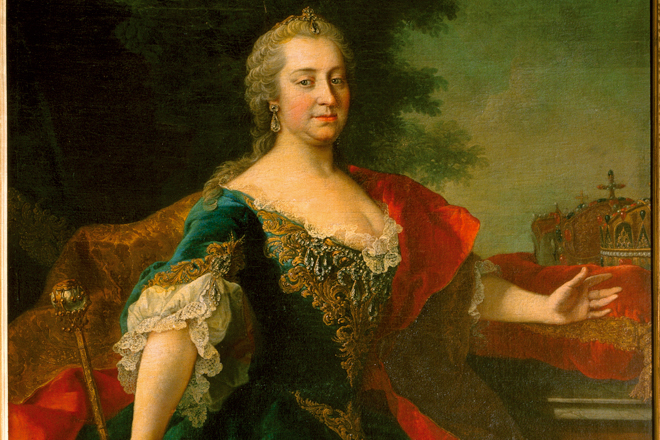
After the Osmans (Turks – Ottoman Empire) were pushed back during the 17th and 18th Century, the Habsburg emperors Leopold I, Karl VI, Josef II and Empress Maria Theresia began to populate the devastated areas of South Hungary. In the lowlands of the Danube and the Theiss (Tisza), farmers and craftsmen primarily from Southwest regions of the Empire were systematically settled. The total number of settlers, organized by the government or private enterprise, reached about 150,000. The majority were from Alsace-Lorrain, Palatinate, Baden-Wuertemberg, Luxemburg and Bavaria (including Franconia).
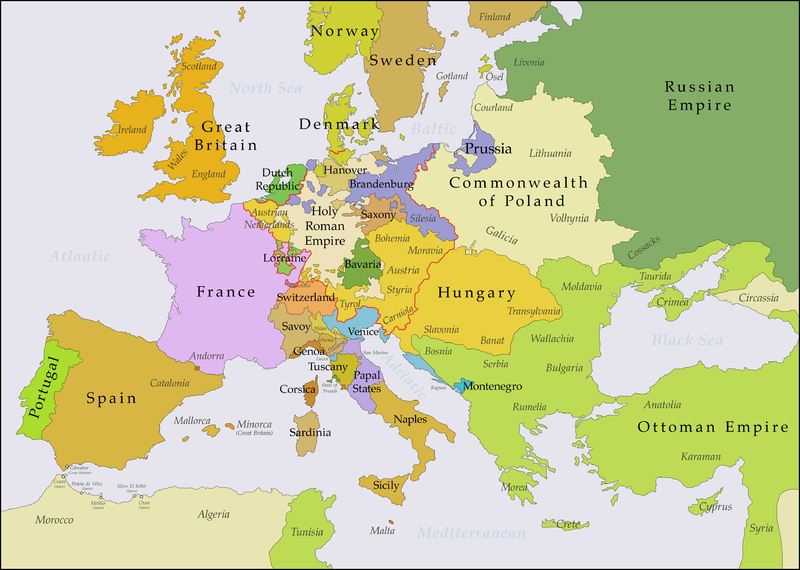
Hessians, Aargauer (Swiss), Westfalians, Prussians, Saxonians, Thueringers, Austrians, Bohemians- Moravians, French and Dutch also found a new homeland here. The documents and the neighbors called them Schwaben even though only a few were really Swabian (from the Kingdom of Swabia – southwest Germany today). The French and Spaniards, for instance, call all the Germans Alemagnes. Only after the First World War, in 1922, when the Danube-Swabian settlements were divided between Hungary, Yugoslavia and Rumania, was the name Donauschwaben coined. [No wonder I never heard such a word in my family – they had all left for the USA by then, between 1905-1908. -cy]
When WWII began, more than one and a half million (1.5 million) Donauschwaben made up the largest German population in Southeast Europe. Escape, eviction and expropriation during and after the war caused a worldwide diaspora, bringing the “youngest, newest German tribe” to an end. In the original regions – today’s Hungary, Croatia, Bosnia-Herzegovina, Serbia and Romania – only a few Donauschwaben still live there. Those few, like the Donauschwaben in the ‘host countries’ of Germany, Austria, USA, Canada, France, Brazil and others where they emigrated, have totally assimilated.
Foundation of the Village of St. Anna
Baron Jacob de Bibich, landowner of all the properties in the Zarabder Komitat (Komitat is district or county) founded the township of St. Anna, in accordance with Empress Maria Theresia’s settlement program of the Banat, passed by the Hungarian Parliament at Bratislava in 1723.
There are two opinions about the actual date.
Andreas Oster, after checking documents and archives in Austria-Hungary for many years and at the church communities in the region, arrives at the following conclusion:
- 1742 Foundation of the community Sanktanna
- 1751 June 8th, arrival of the first larger German families – nine families are from the Kraichgau. (See map at previous post) – today’s northwest Baden-Würtemberg)
- December 4th, another group of twelve families, also from Kraichgau.
- 1752 April 8th, a third group of thirty-nine (39) families arrives, a third of them (13) from the Kraichgau.
- 1753 The last group of 6 families.
Jacob Huebner, author of the monograph of the township Sanktanna, using the historian Sandor Marki and Christian Zenter, and the almanac of two local schools – 1896-97 and 1937-38 – as sources:
- 1736 First arrival of settlers, six (6) families
- 1742 Second group, twenty-nine (29) families
- 1744 Third group, seventeen (17) families
The date of Sanktanna’s settlement is therefore not certain.
About St. Anna
Since its founding in 1742, the name of the village changed with great flexibility. Already six years after the village parish was established, Empress Maria Theresia, Erbkoenigen (hereditary Queen) of Hungary, ordered the change from Komlos (Komlosch) to Sankt Anna. That name included the old Komlos, as well as the surrounding wasteland of FAKO, where the first German families settled.
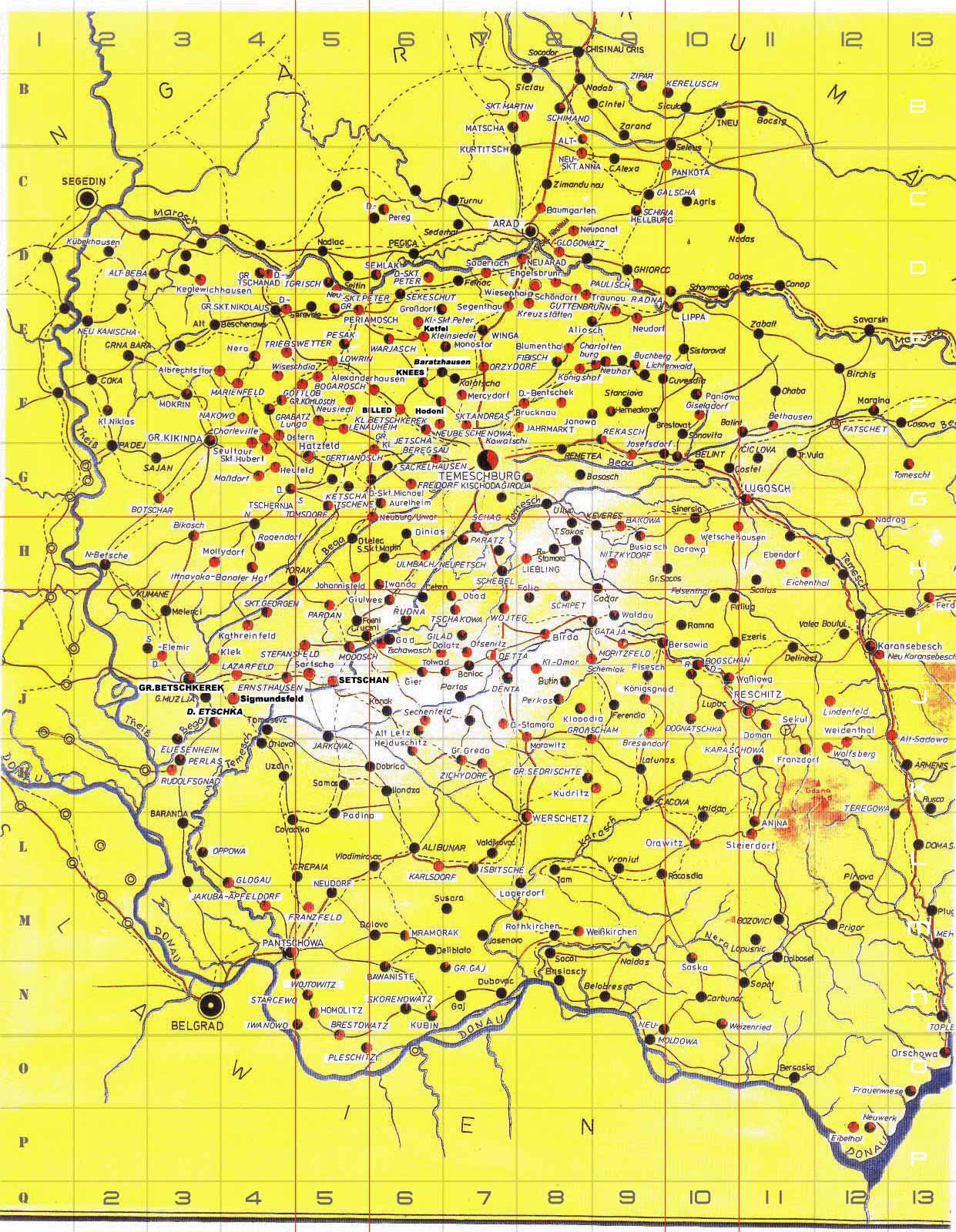
Both settlements, the old and the new, were now marked as ALT (old) St. Anna and NEU (new) St. Anna (see Map above). On the oldest settlement plan or map (1783-84), one can recognize the Hungarian name “Uj-St.Anna” (new St. Anna) on the edge. Up to this date, the twin name was officially used; the local people, however, still used the old name Komlosch.
SzentAnna: The official Hungary ignored the local naming; all maps and documents carry the Hungarian variant, namely “Uj-Szt.Anna/O-Szt.Anna or SzentAnna(Uj) and SzentAnna(O).
Until the end of the 19th Century, the tri-part spelling is kept: Uj-Szt.-Anna or Uj szent anna.
St.Ana: The Romanian classic Ioan Slavici mentioned St.Ana as a neighbor village of “Cumlaus” (Komlos) where he worked as a notary (1869).
Khumlush: The local Germans always pronounced “Komlos” that way, indicating Hungarian roots of Hungarians living there after the Turks left.
Santana: The Swabian “Santana” is a by-ear pronunciation of the Hungarian “Szentanna.”
Szentanna: Changing the three-part name to the one-word name of “Uszentanna” and “Oszentanna” caused great confusion.
Comlaus/Santana: To Romania the ‘new village of Santana’ did not exist. After 1919, the Romanians called the village “Comlaus”, following the Hungarian “Komlos”. Immediately after the regime change of 1919, and until 1935, the railway station and the school report cards carried the name “Santa Ana.”
Sintana: After the Communists took over, a spelling reform took place (1953-54) in order to establish a new national identity, avoiding roots of Christianity and other national identity. Many villages in the Banat and Siebenbuergen were changed.
Santana: The search for a true Romanian identity of the town continued after Ceausescu’s overthrow in 1989. The town council checked historical documents and archives and decided to name the new city Santana.
Social and Cultural Development
Santanna has been associated in Romania as a thriving agricultural community, even though the larger part of the population was not farmers. It’s interesting that the Banater Schwaben south of the Marosch River, especially the ones around Temesvar (Stuhlweissenburg), knew the St. Annares only as successful and tradition-conscious farmers. In order to understand the character of the Santannaer, one has to have a closer look at the history of the settlers, their customs and traditions.
The township of Santanna, far off the main regional as well national traffic connections, has been settled primarily by people from the Kraichgau and Speyer (a city on the middle Rhine, with Kraichgau a little further southeast - see Map from previous post). Mostly farmers from twenty-five different villages, they had their own customs, traditions and religion. They were looking for agricultural land and found plenty of it. Throughout centuries, they could improve wealth and prosperity. A healthy farmer’s community can, however, only exist with good craftsmen around. Therefore, over centuries two social groups developed: farmers and craftsmen. Both were Christians, members of the Catholic Church, but had their own political and cultural life.
Up to the beginning of WWII, only those two German groups were living in Sanktanna. Romanians lived in Altsanktanna (Komlos), belonged to the Orthodox Church and were not known for living as a strong village community [that's putting it nicely -cy]. Up until the Communist takeover, a deep-rooted tradition, and the respective churches, did not allow any interactivity between Catholics and Orthodox.
Dialect
Taking into consideration the original roots of the settlers – coming primarily from the Kraichgau – one would assume that “Wuertembergische” and “Pfaelzerische” would be the language basis. We thought to find some similarities visiting some villages around Speyer.
Jacob Huebner, in his “Monograph of the township Sanktanna,” expresses a different viewpoint. He thinks Sanktanna’s dialect shows distinctive marks of the Suedfraenkisch (South Franconia, around Ansbach), Alemannisch (Baden/Freiburg state), Bayrisch (Bavaria) and Schwaebisch (Swabia). Luckily we know today that the Sanktanna dialect had its roots in the Kraichgau. Mrs. Barbara Novak documented it by her scientific research; there were only slight changes during the 250 years.
After WWII, the Romanian government tried hard to move native Romanians into the Banat and Siebenbuergen to establish an ethnic majority. As a consequence of that policy, Romanians were resettled at the eastern part of Sanktanna (Satul-Nou). Even though the majority of the town was now Romanian Orthodox, there was surprisingly hardly any cooperation between those Romanians and the ones living there for centuries.
We noticed, however, that due to the strong industrialization of the Romanian society and the world-wide inter-relationship of culture, sport and politics, the different ethnic groups in Romania reached closer ties to each other.
World War I
Once again, Sanktanna was drawn into foreign affairs. The war declarations between Austria-Hungary and Germany, the Allies and Romania, involved the peace-loving Sanktannans again. The high school students marched around the town square singing “To the dogs with the Serbs” … but also many farmers complained, “It is unjust what the Kaiser in Vienna is doing to us. He takes our grain at cheap prices and gives us rags…”
The bells of the church tower were ringing the beginning of the war on July 28th, 1914. Many villagers prayed at the village square for Austria-Hungary and then fought for her. The first war victims were young widows and their children. Horses and carriages were confiscated and the church bells were gone also. After the war, Romanian troops occupy the town; Sanktanna is now part of Romania. One hundred young men died in the war and the survivors will be called into Romanian military service.
World War II
For quite a few years we had peace. Sanktanna ordered and adjusted itself to the new political situation. Our young men served in the Romanian Army. All higher officials like Police, Treasury, Railway and Notary Public were now Romanians. But like in the rest of Europe, a chauvinistic air permeated Sanktanna also. First, the Romanian youth organization “Strajerli” (Guard) was founded. All German schoolchildren join “Strajerli,” wearing white blouses, marching, singing, hoisting flags every day.
The singing of songs continues when the NSDAP arrives in Sanktanna and with it Die Fahne Hoch (The Flag High – otherwise known as the Horst Wessels song). All school classes accompanied by brown uniforms march to the cemetery, commemorating the fallen heroes of WWI. All are organized into the Deutsche Volksgruppe (German Folk Group). The pact between Hitler and Marshal Antonescu (Ion Sima – Iron Guard, like German SA) ends with the war against Russia. At the beginning of 1941, our young Sanktannars are called up for service in the Romanian army. On June 6th, Romanian troops cross the River Pruth and march into Russia. Bessarabia and Bukovina return to Romania. After initial success, the German-Romanian armies pull back. In 1943, all young ethnic Germans are transferred from the Romanian Army to the German Wehrmacht.
Many Sanktanners, like Anton Hoeniges, preferred to serve in the German army. Food, treatment and cultural background were probably the deciding factors. At a big rally at the market square in Sanktanna, May 1943, the village judge Franz Mayer said in front of an aroused crowd: “The participation of all men from the Banat liable for military service is a voluntary must.”
Eight hundred (800) Sanktannars march into a war which is already lost. Crying wives, mothers and children remain. When the Romanian Army changed sides on August 23, 1944, great confusion seized the villagers. From then on, no messages about their soldiers would reach the village. Deep sadness took over. Immediately after the Russians march in, the punishment of the Banater Schwaben starts – they are accused as warmongers.
Young Sanktannars in Russian Camps
One thousand young women from Sanktanna are deported to Russia – forced into restitution work. No compensation, no apology is ever offered by the Romanian government.
World War II toll in Sanktanna
350 dead or missing 270 women died in Russia
Expropriation from all Germans No pension for war widows
Service in the Romanian Peoples Army
The consequences of the lost war are lasting. Sanktanna completely lost the confidence of the new Romanian government. But her young men must still serve in the Romanian Army. Children of the war generation are accepted in the Romanian youth organization; they sing again, however under the star of the Romanian Communist party. The star is omnipresent. Direct or indirect, all Sanktannars have to participate in the restructure of the socialistic society. Defense of the country is the task of the Romanian Army. As a member of the Warszawa Agreement, the militaristic and propaganda strategy is primarily directed against NATO allies, but specifically towards the Federal Republic of Germany. With that in mind, all Banater Schwaben face an historical identity problem. Without loss of their roots and identity they cannot remain in a state of forced nationality. The only way: resettlement in Germany.
Emigration to Germany
Aussiedlung (Emigration) is the official German description of the resettlement of members of German ethnic groups from Eastern Europe, according to the Bundes-Vertriebenen Gesetz 1953. The resettlement of the German population of Sanktanna took place within the space of 25 years and reached 95%!*
From 1975 to 2000, six thousand (6000) Sanktannars left and found their new Heimat (home) in Germany.
*According to the 2011 census, the Santana population is 10,725, breaking down ethnically as 85% Romanian, 9.5% Roma, 3% German, 2% Hungarian. 79.6% are Romanian Orthodox, 11.5% Pentecostal, 5.5% Roman Catholic and 1.2% Baptist.
Historical Doubts about the Banat Experiment
After Austria’s defeat by Prussia and the following peace treaty of Königgraetz, Chancellor Bismark initiated the disintegration of the Habsburg Monarchy: “A strong Magyardom is strategically of great importance for the protection of the southeast flank of the German Empire.” The double monarchy Austria-Hungary was founded in 1867 under that assumption. Austria had to cede the Banat to Hungary. All the privileges granted by Maria Theresia to the settlers in the Banat were recalled by the Hungarian government. Language, tradition, identity and culture were attacked. The first doubts about the settlement in the Banat arise. Magyarization follows.
Dissolving the Territorial Unity of the Banat
After Germany’s and Austria’s defeat in WWI, France and England decided to divide the Banat. The eastern part went to Romania, the western part to Yugoslavia. The loss of territorial integrity destroyed the identity of the German settlers for good.
The Thought about Escape
After the retreat of the German army from Romania, thought about fleeing already began. But then the villagers doubted if they could succeed. The battle lines (front) changed from day to day.
King Michael and his Dubious Role
Already during the war, in 1943, King Michael started secret negotiations with the Allies for an early withdrawal of Romania. Finally Romania changed alliance. By October 25, 1944 Romania was occupied by Russian forces. King Michael tried to save his kingdom in vain. During his regency, the persecution of the Germans in the Banat and Siebenbuergen (Transylvania) began. They could not hope for any help from the House of Hohenzollern.
Consequences of the War
Escape thoughts turn into emigration matters
Immediately after Romania’s occupation and with the knowledge of King Michael, the Communists began prosecuting the putative war criminals. German women and men were sent to forced labor in Russia in order to pay for the war debt. Two hundred eighty (280) citizens of Sanktanna had to pay for it with their lives. At the same time, the Romanian government decided on the expropriation of all German property. For many villagers that meant loss of property, injustice, persecution and deportation. Emigration became the major concern of the villagers; most of them thought they should have left Sanktanna during the war. All Romanian governments, however, denied the emigration plans of the Germans.
Nicolae Ceausescu was the head of Romania from 1967 to 1989. By his nationalistic foreign policy, he obtained a certain independence from the Soviet Union. With the help of his secret service “Securitate”, he could successfully pursue his major goal – to remain in power. His social policy aimed at a multilaterally developed society. All officials and party members were supposed to follow that policy. It should guarantee all ‘minorities’ individual identity and tradition. The minorities considered those cultural programs ordered by the government as trials to assimilate. Ceaucescu’s economic policy aimed for a forced industrialization. To realize those goals, he used forced resettlements and an increase of debt to foreign lenders. The deficit of the Romanian state shot sky high. In order to balance that deficit, Ceaucescu ordered an increase in the export of consumer goods which sharply reduced the supply for the domestic market. The Romanian people suffered, while Ceaucescu, his family and political friends lived in luxury.
Family-Reunion or Emigration
Based on international agreements specifically with the Federal Republic of Germany, Romania practiced a “benevolent” policy regarding the reunion of families. As a service in return, Germany agreed to compensate Romania for its effort. The agreement provided only a limited number of family reunions per year. The people who wanted to emigrate and wanted to be included in the annual quota had to come up with their own additional funds. The emigration statistic shows that emigration was preferred to family reunion.
Germany, the Goal of Emigration
The government of the Federal Republic of Germany declared its full responsibility for all German “after war affairs.” For the resettlement of ethnic Germans, the Federal Republic was the only place to be considered. The original homeland of the Volksangehoerigen (ethnic Germans) is located in the Federal Republic: Baden-Würtemburg, Rheinland-Pfalz and Bayern. Deeply rooted in tradition, language and culture, the Banater Schwaben considered Germany for centuries as their Stammland (original homeland). Political freedom, prosperity, cultural and economic achievements are greatly appreciated by the Banater Schwaben.
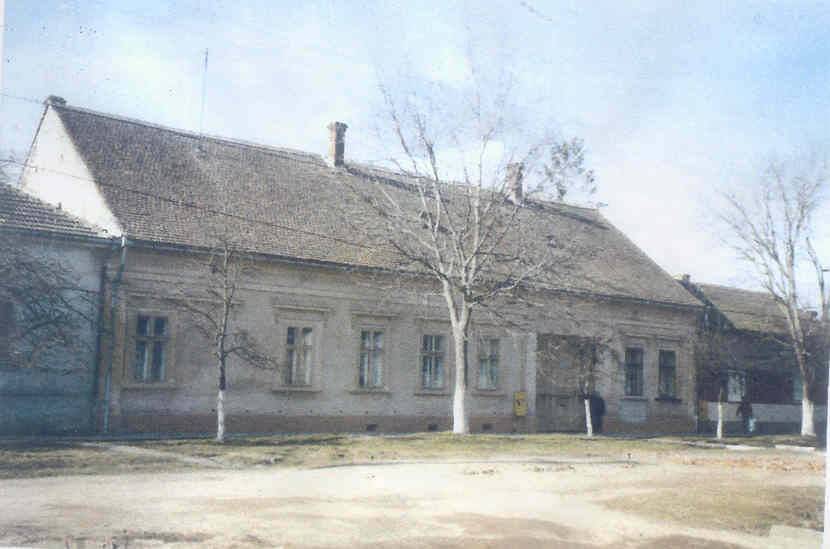
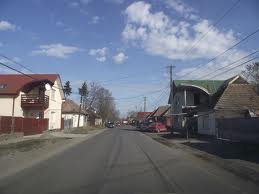
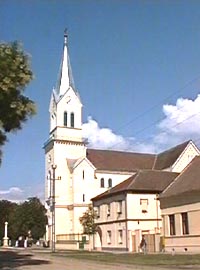
Santana today, void of Germans, is just a dumpy Romanian town. I found this picture (above) of a 100 year old house for sale. It's described as having been built by a wealthy German, well-constructed with many amenities including gardens and orchard. 4 bedrooms, 1 bath. Price: 62,500 Euros. Below are two other pictures of present day Santana: Left, a street with houses, Right, a German church with other buildings.
- 11390 views
Comments (50)
Thank you for your excellent work. I hope I will get permission to link to your webpage from WikiTree.
You are welcome to do so, Eva.
Very interesting! My grandparents & Mother left Santanna for Canada in 1924, in search of a better place to live in peace. My grandfather left all his siblings behind. Family connections were by mail and much of that was read/changed prior to its arrival in either Country.
My grandmother's maiden name was Frank. Most of her family went to Bloomington, IL. Sometime around 1906, Anna Frank came to the U. S. On the Bremen ship to Ellis Island. I know that my grandmother was from Oltsanktana, (as written on the ship manifest). My grandfather had a Magyrized last name, Ilie Bugy. He identified as Romanian on the ship manifest. They married in Bloomington, IL (yr. ?). They moved to Chicago, where I still live. His name was changed at Naturalization to Elie Bugyie. I've always wanted to know what my grandfather's last name was before it was Magarized. Not quite sure where to go from here! Any advice would be greatly appreciated.
Thank you,
Margaret Bugyie Estrada
Hi Margaret,
The name Bugy or Buggy or Bugiyie is not in the Familienbuch Sanktanna. but your grandmother's family is. She was born in Santana on Dec. 21, 1887 to Johann and Barbara (nee Kerner) Frank. They had eleven other children, only five of whom survived to adulthood:
Johann, born in 1872, died in Bloomington IL in 1949
Magdelena, born in 1877, died in Santana in 1901
Kaspar, born 1879, died ?, married Rosalia Mayer in 1902
Simon, born 1883, died 1928 in Bloomington
Phillip, born 1890, died 1942 in Worth IL
Anna married Eli Bugyie (Buggi) on Feb. 17, 1908 in Bloomington. He died in 1961 in Worth IL. You may already have all this information. Sorry I cannot help you with your grandfather's Romanian name. You could write to the City Hall in Santana, Romania (find it online). They might have a birth record for him. Or know what the name would be in Romanian.
Hello,
I wrote the "Family Book Sanktanna"
What do you seek?
Alf
Thank you so much for your history. It explains why my ancestors were from Hungary (St. Anna) and identified as Hungarian, but weren't ethnically Hungarian. My Ancestry DNA test (and the test my grandfather took) have been confusing me to no end.
Thank you for the history lesson of our people. My Opa' side (Borst) was from St Anna and was one of the soliders that fought with the Germany Army in WW II. Unfortunately my Opa died a few years ago (as he was Predeceased by my mom, my uncle and his wife) . Do you happen to have more information on our family?
I don't find the name Borst in the Santana Family Book, but the name Boros/Boross is there, but only one page. It appears to be Hungarian. I would need some names and, hopefully, dates also, to see if anything matches.
Thank you for sharing all of this work! I have been searching for information about my great grandmother, Margaret Zimmermann. We know she was the daughter of the mayor and she came to the US somewhere between 1920 and 1940. She rarely talked about her homeland. She fell in love with Frank Weckerle but was not allowed to marry him. She married my great grandgather, Joseph Muller. Once widowed, she found Frank and finally married him, Any help you could offer on theses three names would be greatly appreciated!
Thank you!!
Hi Liz. I found a Frank (Franz) Weckerle, born 1904, son of Jakob and Cecelia Weckerle, who married Katerina Zimmermann in 1927. She was born in 1907. He is listed as dying in 1945, around that area, and being a farmer. There is no death date for Katerina, implying she may have immigrated elsewhere, like to the USA.
Sorry, I don't find anything else.
Hello Liz Wilson. My name is Elek Schneider and I trace my paternal grandmother's family to Sankt Anna. Her maiden name was Zimmermann and she was born in Almaskamaras, Hungary, which is roughly 25-30 kilometers from Sankt Anna. Her father, my great-grandfather was born in Sankt-Anna and his family originally came from Betra and Dettingen, Germany. I can't imagine there were many Zimmermann families that settled in Sankt Anna and I wonder whether we have common ancestors. I'm trying to find out what happened to my great-grandfather's siblings after the Germans were expelled. My hope is that their descendents are in either Germany or Austria, perhaps some even emigtrated to the United States and/or Canada. I live in Chicago, IL and you are welcome to contact me at [email protected]. I'm going to Hungary and Romania later this summer to do some genealogical research. Hope to hear from you. Servus!
Hi, I believe my great great grandma Anna Adelman was born there. Her parents were Johann Adelman and Rosalia Pfister. Her birthday was July 30 1881. I was wondering if you could find her in the family book. As another commented, I initially expected to have a lot of Hungarian dna but when I took the test there was no Hungarian and lots of German. Now that I've begun working on my tree I understand why a bit better. Thanks for the article. It is very informative!
Anna is in the book, as the daughter of Johann Adelmann and Rosalia Pfister, just as you said. Born July 29, 1881. Shows she died in the USA but that is all the information there is.
But there were some other children born to this couple: Franz in 1879, Stefan born in 1893, Two girls died at birth. FYI, Johann Adelmann was born in 1855 to Stefan A. and Anna Mayer. The first Adelmann is listed in Santanna in 1755.
Rosalia Pfister was also born in 1855 to Sebastian P. and Katerina Buttinger.
Thanks so much! How nice to have such solid confirmation. I had almost all that info correct on my tree except for Rosalia's parents which I had no info for. I really appreciate you taking the time to look it up and let me know. You've been such a blessing to me!
Does the book happen to give birth dates for Rosalia's parents or any other useful info on them? Also, Anna ended up marrying a Philip Theiss who was from Austria/Hungary on his info that I found. He wouldn't happen to be from here as well would he?
Yes, Sebastian Pfister was born Jan. 20, 1828, died Nov 12, 1886. His occupation is listed as a Seiler (ropemaker). Remember they all had tracts of land, plus they had or learned trades. He married Katerina Buttinger on July 14, 1853. She was born in 1829, died in 1888. Her parents were Johann B. and Marianne Bandl. She is also listed as a ropemaker. Some are given occupations and some not, so they must have practiced it to a degree.
Rosalia is listed as a {Schmied) but put in parentheses. That is a Smith or Smithy. She died in Gervais, a nearby town I assume, in 1941. So she would have been 86 - pretty darn old for those times.
Theiss is not among the names of the families there. Philip is not a name they used either - don't think I've ever come across a Philip or Phillip. But I remember there was a Frank Theiss that was very active in the Family Society in Bloomington, IL. But he would not have come from Santana. Maybe his father, or he himself, married a woman who did - those people were eligible too.
The first Buttinger arrived in 1752 from Tiefenbach (Germany). The first Pfister arrived in 1788 from Dettingen (Germany). That is in my ancestors' neighborhood - we could be related. If you want me to go all the way back, I can.
Wow! Thanks for the info! How funny it would be if we were related. Rosalia and Johann actually followed their children to America and died in Gervais, Oregon, which is close to both Dallas where Anna lived and McMinnville where Stefan was. She arrived here in 1893 when she was 38. In her husband Johann's passport application he is listed as a blacksmith so no wonder Rosalia was also. Sounds like these couples tended to work together :). Apparently the two went back to Austria 9 years later for a temporary visit. I can't help but wonder why. They were living in Bloomington, ILL at the time.I noticed that the son Stefan was born only a month before they came to the US. Thanks so much for the info to add to my tree and the time that went into finding it! It's so fun discovering more!
Oh, and I'd certainly love for you to go all the way back if you don't mind! :)
So we ended with Sebastian P. and Katarina Buttinger, I believe. Sebastian, born 1828 to Johann P. and Katharina Mayer. Johann P., born 1795 to Johann Jakob and Katerina Mayer, married another Katarina Mayer (1798-1882) in 1820.
[It's not unusual to marry with the same family through a few generations. Also giving the offspring the same names. And yes, I noticed too that wives and daughters sometimes learned the trade of their husbands/fathers.]
Johann Jakob was born in Dettingen, Germany in 1764 and died in Santana in 1803. His parents were Josef P. and Katharina Kocheise. The first person listed for Pfister is Jakob, born/died in Dettingen, no dates. His marriage partner was Anna Marie Peppier - one date given for her, 1698.
More coming ...
For Kim:
Stefan Adelmann, born 1824 to Josef A. and Barbara Kress. [I have a Kress in my family; my mother's aunt married a John Kress from there.]
Josef Adelmann, born 1790 to Josef Adam Adelmann and Margarethe Gillich. He married Rosalia Leib in 1813.
All the Adelmann's came from Külsheim, Germany, but it is not sure whether Josef Adam was born in Külsheim or in Santana, in 1751. He died in Santana in 1822. Margarethe died in 1825. They are the first of your direct ancestors in this book.
FYI, the very first Adelmann listed is Veit, who died in 1680 in Külsheim. He was married to Anna Maria ? (1624-1690).
Hi,
I want to recognize the family line from my grandfather. His name was Matthias Kerner. He was born on 29th of September 1930. He married Katharina Rentz (Birthdate: 25th of April 1931.
Can anybody please help me to find his ancestors?
Thank you,
Markus
I found Matthias Kerner (born 29 Sept 1930) and Katharina Renz (b1931, no death date) in the Santana Family Book. Says Matthias lived in Baienfurt (Germany) in 2003. That must mean he was living there when he died, I'm not sure.
Matthias' father and mother: Anton Kerner (b3-30-1892, d8-23-1940 in Santana) and Barbara Renz (1897-1981)
Anton's parents: Mathias Kerner (b8-5-1862, d1-12-1943 in Santana) and Anna Laub ((1872-1929)
Mathias' parents: Anton Kerner (b12-22-1818, d3-13-1875 in Santana) and Elisabeth Täuber (1818-1884)
Anton's parents: Simon Kerner (b2-13-1789, d4-9-1862 in Santana) and Magdelena Mayer (1793-1855)
Simon's parents: Michael Kerner (b1761/2 where unknown; d1-4-1830 Santana) and Maria Elisabeth Kling (1766-1844 in Santana)
Dear Carolyn,
thank you very much! That helps me a lot. :)
Hello,
I’m asking about my grandparents, who both grew up in Sanktanna around the war years. My Opa was named Anton Gillich, was born in 1924 and fought in the Second World War. I suppose he would have been drafted, though I don’t know what year (1942-1943?) He never really spoke about it, maybe there is some record of what happened to most of the young draftees from that town—were they Romanian soldiers at that point? As Germans, were they sent to the Wehrmacht?
As for my Oma, she was from the same area and was born in 1923, and after the war she says she was taken along with other people to forced labour camps in Russia; I know in her case she mentions Dnipropetrovsk as being where she went.
My grandparents emigrated to Canada in the early fifties, and my Opa died in Montreal in 2011. My Oma is still alive today, and still talks about being in Russia (It‘s really Ukraine but who’s splitting hairs).
I guess I would like to know what information you might have on the context in this town at the time these events were unfolding. Was my Opa drafted from a field to be sent to the front? How many other people were sent to work camps after the war? Is there anything interesting about the Gillichs or Mayers in the Familienbuch? I know my Oma’s mother was a seamstress, and that’s about it. I guess my Opa’s family were farmers.
Anyway thanks for your help, I appreciate a lot!
Peter
Hi Peter,
Yes, your grandparents are in the Family Book. There are 5 1/2 pages of GILLICH.
Anton Gillich was born Dec. 16, 1924 and died Sept. 1, 2011 in Montreal, CA. His parents were Jakob and Katharina Taeuber Gillich. He married Rosalia Mayer (born 1923) on Nov. 25, 1950 in Santana. She still survives?
Jakob (b9-1-1891, d8-1-1946) was a farmer, as you said. Katharina Taeuber (b1894, d1973).
Jakob's parents: Johann and Juliane nee Baumann. I could go back further for you. And there are siblings too.
Lots and lots of MAYERS.
I find Rosalia Mayer, bFeb. 23, 1923; a mother's name given - Maria Mayer - and no further information, maybe because of going into Russian custody.
Maria Mayer was born 10-31-1903, d 11-5-1981. Her parents were Josef and Katharina nee Oster Mayer. No marriage partner shown.
Now here's what's interesting. Your Oma Rosalia appears to have a brother, Josef b9-20-1925, d 8-9-2002 in Lindenstruth (must be Germany). It also show his mother was Maria Mayer, no father. But Josef married Theresia Bleiziffer (1930-1981) on 10-20-1951. I am related to the Bleiziffer family; my great grandfather Stefan Jaeger married a Theresia Bleiziffer in 1879 - no doubt from the same family. So if you want to contact me via email, we can keep in touch on it. And I can give you more info if you want it.
I appreciate your efforts to answer my question. A few odd points:
my Oma always said her birthday was October 1st; either the record is wrong or my Oma is, but I suppose it’s possible the record keepers made a mistake or else maybe Oma’s Mom wasn’t even sure of the date.
my Oma is still alive today, yes. My Opa never spoke about the war, but I think once he mentioned being a soldier in the last boat to leave for the west from the Russian invasion of Danzig (Gdańsk today) in ‘44 or early ’45. He did die in Montreal in 2011, I remember his funeral. My Oma I don’t think ever mentioned a brother, only a sister.
Anyway thanks for the help.
Okay, taking a fresh look in the daytime, I find Rosalia Mayer (number 904 of the individuals born with name Mayer in Santana) and the dob is indeed Oct. 1, 1923. Her parents are listed as Karl and Rosalia Sandner Mayer. The rest is the same as before.
I also find her sister (#854) Maria Mayer, b 8-22-1919, lived 2009 in Baunata. (So I take it the last information came to Alf Kuerht in 2009.) Maria married Karl Zimmermann in May 1943. He died in 1978, apparently in Santana.
Their father was Karl Mayer born 11.11.1858, died 29-11-1932. Their mother was Rosalia Renz, b1850, d1929. They married in January 1881. Now this Karl's parents were Adam Mayer and Regina Daminger. There is no number for Adam, so he may have been born in Germany and emigrated to Santana. I found Regina Daminger (#98), born Oct. 1 (!!) 1834, died 15.11.1886. Married Adam Mayer (1836/7-1884) on 19.5.1856.
Regina appears to have two younger sisters who lived, Barbara and Katharina, two brothers Anton and Michael.
There are no Bleiziffers in your family tree, haha. I also have a Daminger in my history, but I can't find any link with her to your Daminger. So that's it.
I must say, I don't know how Alf Kuerht managed to keep all this straight without going batty. It gets really dizzying (I have to wear two pairs of strong glasses to read it), but he seems to have it all in order. Must have computer help.
Ah okay, thanks again for your attention and your effort!
My Name Is Rhett Hellstern and just came across your site.
My Great Grandmothers name was Josephine SChillinger she was born in 1891 in St. Anna.
Her mother was Anna Schillinger born in 1853. Wondering who the father is and other information you may have.
I found Anna Schillinger, born 2nd June, 1853 to Josef (Schillinger) and Anna Schiller. It shows she married Franz Orovetz from Simand on 29 January 1891. Anna's occupation is shown to be a Schneid. (abreviation for cutter of some kind). Anna Schiller and Josef had other children: Josef, 1847-1867; Barbara, 1854-1873; Michael, 1860-1872. Others died very young.
Josefa was born 26 Jan, 1891 to Franz and Anna Schillinger. She used her mother's name. Josefa married Anton Hellstern on 23 November, 1911. He died in Chicago in 1975, she died in St. Petersberg, Fla.
Under Hellsterns, I found Anton, with .-SLC after his name. Don't know what that means. He was born 5th May 1888 to Anton Hellstern and Elisabeth Metz. He married Josefa Schillinger on 23 November, 1911. She died in Florida in 1990; he died in Chicago 15 years earlier.
Further, it shows that this same Josefa Schillinger and Anton Hellstern had a son named Geza, born 7 March, 1911 in Arad. Geza married Anna Fritz in 1931 in Chicago. She died in 1981 in Lake Geneva.
Children born in US to Anton and Josefa: John, born 1917 (Chgo); Frank J., born 1922 Chgo; Joe, 1923; Anna, 1927; Andrew. 1928.
Hello Carolyn,
I was wondering if you could tell me anything about my family. My great great grandmother Josephine Mayer (spelled Meyer on death certificate). Maiden name is Gopfrik. It looks like her fathers name was John Gaffrey. Her daughters name was Teresa Mayer. They emigrated to Bloomington and lived by the train yards.
Thank you for all the good information on this site. It has been interesting to read.
Hi Andrew,
There are no Gaffreys or Gopfniks in the Family Book. Was Teresa Mayer, Josephines's daughter, born in Bloomington? You need to give me some approximate dates or ages of the Mayers, as there is lots of pages of them. Thanks.
Hi Carolyn,
Josephine's death certificate states she was born on April 22nd 1857. I believe that her maiden name is spelled Gopfrich, the previous spelling was from an immigration record. Teresa was born in Hungary, came to the U.S. with her mother, Josephine. Thanks so much for looking!
There are 15 pages of Gopfrich's in the book! Josefa is #175, born 22 March 1855 to Johann and Anna (Steigberger). She married Johann Mayer on 23 February 1873. She was a soldier (!) and died in Bloomington IL on 2 May 1940. The birth date for her husband is 1846, no death date.
Josefa had an older sister Anna (1848-1907), a farmer, who married widower Andreas Schwarz in 1876. Two other older siblings who survived were Theresia (1843-1927) and Jakob (1839-1922).
By the way, the orignal Gopfrich came to Santana from Flehingen, Germany, near Karlsrhue, in that same small Kraichgau area most of us came from. See here.
***
Theresia Mayer, #612 of the numerous Mayers in the book, born to Johann and Josefa (Gopfrich) on 17 August 1892; died 4 Sept 1929 in Bloomington IL. She was the youngest surviving child of her parents. She married William Garbe (1886-1939) on 15 January 1915 in Bloomington, IL.
Johann and Josefa had many children, most of whom did not survive. Those who did were Barbara, Rosalia, Katharina (died in Bloomington in 1942).
Glad we persevered, Andrew. If you'd like anymore details about the siblings, etc. I can give it to you. Which train yard did they live by?
My fmaily lived by and worked at the Chicago and Alton yard. Theresia lived directly across the street from Sheridan School on Blackstone St. My father lived on Walnut St.
I would like to know if you have a sibling named Andrew Mayer. I have heard that he moved to Africa.
Thank you again for all your hard work!
I saw his name but didn't add him because there wasn't much info. But #434, Andreas Mayer, born 30 April 1874 to Johann and Josefa (Gopfrich). Died in Pretoria, South Africa, no date. No further information. He was probably a soldier like his mother. I think soldiering ran in that family - there was another one, too, as I recall.
Yes, I know the Chgo.-Alton railyards very well. Seminary Ave. ran along part of it. That's where the German-Hungarians first settled. So many good memories.
I pray that none of my family is left in South Africa. The crime and farm murders are hideous. On top of that, out right denial or silence from "leaders" of western countries. Very sad situation...
I had cousins that lived on Seminary and Allin, not far from the club. I'm not old enough to know the good times but have heard about them.
Hello, my Great great grandparents Anton M Marksteiner and Barbara Teiber immigrated to Bloomington, Illinois in the early 1900s. I’ve always been told they were Hungarian and never had any reason to believe otherwise until further research. I know Anton’s father’s name was Johann Marksteiner and his mother Anna Fuss. However, I have no further details about their birthdates or parents’ names etc. From what I have gathered, Barbara’s parents were named Francis Teiber and Josephine Erhmantraut. However, I’ve only been able to discover that Francis‘ father’s name was John Teiber and no further details. Katharina Totterer was his mother but all I found was the dates of birth and date she passed away. Furthermore, I found much info showing Germanic roots of Josephine’s father Anton Emeneth (maybe last name changed) but only the name of her mother Katharina Kohler’s birthdate. Lastly, should I get the impression that they were not genetically Hungarian at all? Thanks very much for any information!!
my grandmothers name was Katherine Teiber and married joseph kaup and they moved to Bloomington early 1900 where they brought from Hungary my three oldest aunts Mary kaup etc.
this is all very interesting
I guess you know that Joe and Carl Kaup were charter members of the Hungarian Club in Bloomington. There's a picture of him in a 5-man Sunday afternoon pinochle card game round about 1960-ish. All are dressed in suits and hats.
Yes I remember the club, I remember the one lane bowling alley. I think My Grandfather Joseph started the club with others.
I found Anton Marksteiner, son of Johann and Anna (Fuss) right away. He was born on Dec. 22, 1887 in Santana, died March 28, 1980 in Bloomington, Il. There was a previous "Anton" listed who died at birth or was stillborn on Jan. 3, 1885. Anton and Barbara Täuber married on March 9, 1912 in Bloomington.
His father Johann, a farmer, was the son of Sebastian and Magdalena (Adelmann). Johann married Anna Fuss on Feb. 4, 1883. Sebastian's parents were Sebastian (1797-1871) and Rosalia (Schwarz 1798-1837). This Sebastian later married Anna Mayer, a widow, after the death of Rosalia. He was a weaver. Now it goes back two more times to a Sebastian born in 1766, and then to Anton (1742 in Grombach, Germany -1784 in Santana) and Barbara (Geiger 1741-1786). This Anton is the one who came to Hungary from Germany with the trade of Weaver.
Anna Fuss (1859-1933) was born pre-nuptial to Elisabeth Fuss and (Anton Adelmann) so its possible they never married since Elisabeth Fuss (1838-1911) is listed as a soldier. Her parents are Anton Fuss and Regina (Nachbar). Anton was a farmer, born to Martin (1792-1856) and Barbara (Reinholz).
Barbara Täuber (9-14-1889 to 6-7-1963 in Bloomington) was daughter of Franz (Frank) and Josefa (Emeneth). She had a sister, Katharina, who died in Normal, IL in the same year as she, who married Joe Kaup (I knew him!) on April 16, 1907. Another sister Eva also came to Bloomington, married to Andreas Steigberger, died in 1974.
There are no Erhmantrauts in the Family Book but 8 pages of Emeneths.
Franz Täuber was a hat-maker, died in Bloomington in 1916. (He may have been a partner with my grandfather Jaeger for awhile. The name was pronounced like Tiber, just like you're spelling it.) His parents were Josef (1819-1865), a farmer, and Katharina (Totterer 1823-1898). Josef's parents were Josef Kalasankt (1792-1853) and Margarethe (Seiler 1794-1869). Going back from there, we have Johann (1766-1835) and Bibiana (Schoch 1760?-1831). Before that: Johann Michael, born 1737 in Rohrbach, Germany; he married Anna Maria Schissler in 1760 in Santana. Died 1799. He's the original settler.
There are no Hungarians here, Noreen. If you have further questions, I might be able to answer them. You can also email me at [email protected]
Thank you very much for taking the time and effort for this information, Carolyn!! This is amazing! You helped me fill in many gaps in my family tree and as I input the information you gave me, ancestry started picking up on t the same details. It is very intriguing to find out these details and learn more about the history of Santa Anna. Also, very excting to read how our grandfathers may have worked together.
Thank you again and I will be sure to reach out as I continue on my research!!
Hi,
Ferdinand Leopold Schwarz and Anna Theresa Henger married and immigrated to Mansfield, Ohio. Their honeymoon was spent on the ship. They are listed as being from Sîntana, Arad, Transilvania, România. We believe Ferdinand's parents were Franciscus (1853) and Josepha Hermann (1862). And Anna's parents were József Henger (1853) and Anna Horn (1861). We think Anna Horn's parents are Jacobus Horn (1823) and Maria Riesenberger (1830). any help on these 2 families would be so greatly appreciated.
Thank you,
Bonnie Enderle
Yes, I found Anna Henger, born Oct. 7, 1899, died Feb. 25, 1990 in Mansfield, Ohio. She married Ferdinand Leopold Schwarz (1896-1983 Mansfield) on Nov. 15, 1921 in Banat.The Hengers all came from Empfingen, Germany in the 1750's and 60's - bunches of them!
Anna's parents were Josef Henger (1853-1920) and Anna Horn (1858-1900). They married in Janurary 1879. Both are listed as blacksmiths (or smiths). When Anna died, Josef married Anna Wess in 1901. Anna Horn's parents were Jakob Horn and Maria Riesenberger. The name Riesenberger is not in the Family Book. I don't know where she came from, but she had a number of healthy children who grew up and married; none died early until the last three she had. One died at age 13 - sad.
Ferdinand Leopold was born Nov. 15, 1896 to Franz Schwarz, a farmer, and Josefa Hermann -- born 1852 and 1861, respectively. Franz' parents were Anton Schwarz and Katharina Schmidt. Josefa's parents were Leopold Hermann and Katharina Hell. (One of my great-grandmothers was a Hell - there were a lot of them. The first ones there (5) were born in 1740's in Eppingen, Germany, and 2 in 1750 & 52.)
My grandmother, Anna, was born in Santana in 1922. We assume that her parents, Josef Leib and Barbara Schwarz were also both born there in 1892 and 1898, respectively.
Any information on their families?
Is it possible to get birth certificates/confirmations for both of them through either the Romanian or Hungarian embassies abroad?
The Family Book shows Anna Leib born on Oct. 1, 1922 to Josef Leib and Barbara Schwarz. Anna's siblings were Josef, born Feb. 4, 1921 and Urban, born Nov. 11, 1919 (died March 8, 1920). There is no other information for Anna or her brother Josef.
Josef Sr. was born Jan. 10, 1892 (pre-marital) to Josef Leib and Barbara Taeuber. He married Barbara Schwarz on Jan. 20, 1919. She was born in 1898. Josef had a brother Anton, also born pre-marital, in 1894. Anton married Elisabeth Baumann in 1913.
Barbara Taeuber was born in 1873, married Josef Leib (his parents were Andreas Leib and Elisabeth Mackert) in 1896, and was later married to a Hoeniges.
I would try the Romanian embassy, and the town hall in Santana, Romania. I imagine it's possible though I have never tried or written them.
My DNA results from 23andMe
My DNA results from 23andMe
 Ancestry Composition tells you what percent of your DNA comes from each of 31 populations worldwide. This analysis includes DNA you received from all of your recent ancestors, on both sides of your family. The results reflect where your ancestors lived before the widespread migrations of the past few hundred years.
Carolyn Yeager
99.8% European
______________
Northern European - 67.8%
25.0% French & German
5.7% Scandinavian
2.2% British & Irish
34.9% Broadly Northern European
______________
Southern European - 10.8%
2.2% Balkan
1.8% Iberian
0.9% Italian
5.9% Broadly Southern European
______________
Eastern European 3.4%
_______________
Broadly European 17.8%
______________
Totals 99.8% European
_______________
0.1% Broadly East Asian
0.1% Unassigned
_______________
100% Carolyn Yeager
It was specifically noted that I have zero Ashkanazi, zero African (North and sub-Saharan), zero Native American (Amerindian), zero South Asian and Oceanian, and so on.
__________________________________________________________
 Neanderthal DNA - 2.8%
Carolyn Yeager - An estimated 2.8% of your DNA is from Neanderthals. (Puts me in the 60th percentile of all 23&Me users)
Average 23andMe user 2.7%
 Genetic Evidence for Neanderthals
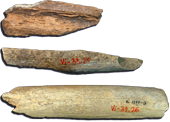
From bones like these three (Vi33.16, Vi33.25, Vi33.26) found in the Vindija cave in Croatia, scientists extracted Neanderthal DNA. Using these samples they painstakingly assembled the Neanderthal genome sequence.
More about Neanderthals
Neanderthals were a group of humans who lived in Europe and Western Asia. They are the closest evolutionary relatives of modern humans, but they went extinct about 30,000 years ago. The first Neanderthals arrived in Europe as early as 600,000 to 350,000 years ago. Neanderthals — Homo neanderthalensis — and modern humans — Homo sapiens — lived along side each other for thousands of years. Genetic evidence suggest that they interbred and although Neanderthals disappeared about 30,000 years ago, traces of their DNA — between 1 percent and 4 percent — are found in all modern humans outside of Africa [Africans have none to very little Neanderthal DNA -cy]. Apart from the curiosity of finding what percentage of a modern human's genome is Neanderthal, the information has great value for science. By comparing our DNA with Neanderthal DNA, scientists can detect the most recent evolutionary changes as we developed into fully modern humans.
____________________________________________
Haplogroup of Carolyn Yeager and her Connections
- H2a2
Maternal haplogroups are families of mitochondrial DNA types that all trace back to a single mutation at a specific place and time. By looking at the geographic distribution of mtDNA types, we learn how our ancient female ancestors migrated throughout the world.
H2a2 is a subgroup of H2
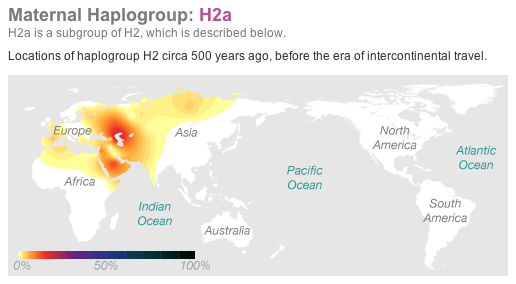
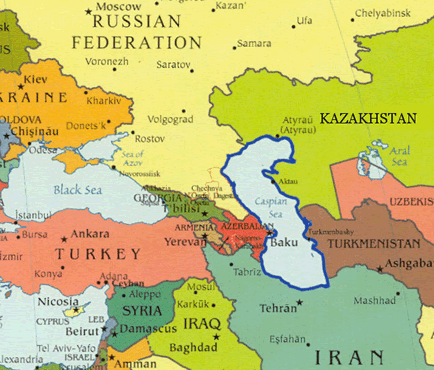
Map shows locations of haplogroup H2 before the widespread migrations of the past few hundred years. The scale bar shows that H2 was never more than 10-15% of the population at its greatest density (shown as red). It originated around and to the north of the Caspian Sea.
Haplogroup H, the parent of H2, originated in the Near East and then expanded throughout Europe toward the end of the Ice Age. Today H is the most common haplogroup in Europe, especially in Scandinavia, where it is present in half the population. H2 is one of the older branches of H; although concentrated in Turkey and the Caucasus throughout its history, the haplogroup has made its way across Europe in two separate passes, eventually reaching the British Isles.
- The first complete mitochondrial sequence (CRS) ever produced was from the H2 haplogroup - H2a2a
- In 2008, a 28,000 year old skeleton was discovered in a cave in Italy which was found to belong to H2a
- In Western Europe, the H2 subgroup is found in its highest frequency in Germany and Scotland
- 4455 views
Comments (6)
Wait a minute. According to Herman Williams III we all have some Negro ancestry! WHERE'S YOURS???
http://national-socialist-worldview.blogspot.com/2013/11/19-negro-no-wa…
I think if the Trisha show or the Daily Mail were reporting your DNA, they would have claimed that you were an Arab or a Turk, because your haplogroup happens also to be found in that region.
Yes, that's right. But looking at other haplogroup maps, my H2 map is the cleanest I've seen, and the most concentrated. H1 is all over the place.
Neat-o! How much does this cost? I am mighty curious about my own DNA, but I wonder how accurate it all really is. I am not saying you were scammed, but maybe there is some criticism of this. Don't know, just saying.
Thus why don't you shut up until you find something out.
Go to 23andMe and find out for yourself how much it costs. Or do a search, there are several companies that offer it. It's not new.
Thanks Carolyn for providing this information. I appreciate it and plan on getting my own results soon.
Please let us know here what you think about the legitimacy of your results. It takes well over a month (more like 2 months) for the entire process to be completed.
This is Larry Kahant
This is Larry Kahant
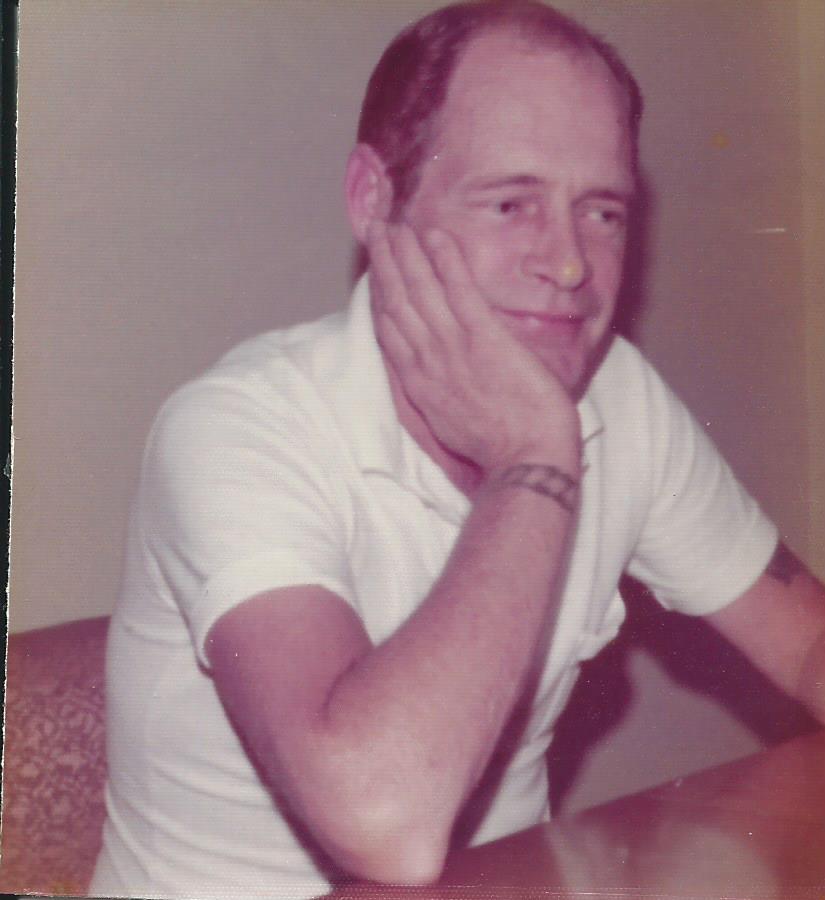
I was married to Larry Kahant from Sept. 1971 until April 1981. This has no relevance to the work that appears on this website, and would be of no interest to the readers thereof, except for the slanderous and ignorant attacks on my former husband made by one Rodney Martin and what used to be "his crowd," all of whom have abandoned him now.
That pig Rodney Martin (and that is a literal description) has claimed to as many persons as will listen to him, that the name Kahant can only belong to Jews. Yet he has not come up with the proof of even a single person named Kahant that is a Jew!
It is sort of like the Revisionists asking "holocaust historians" to come up with the name of one person who was proved to have died in a homocidal gas chamber run by the "Nazis." Just one. They can't do it. And neither has Martin come up with a single Jew named Kahant.
* * *
Larry Kahant was born Lawrence Theodore Kahant in 1933 in Passaic, New Jersey, the son of Theodore Lawrence and Edith Kahant. His father was of German ancestry and his mother of Scots-English ancestry. He had an older sister, Barbara, and two younger siblings, Norman and Lois, who were fraternal twins.
It was understood in the family that Theodore Kahant's father had emigrated from Germany, but none of his four children had ever known their grandfather, he having died before that was possible. I have no recollection of any members of their mother Edith's family that they might have known, but I think there were some. I met Larry through his younger brother's wife in early 1971, and at that time his father was already suffering from arteriosclerosis - called at that time "hardening of the arteries," which severely affected his memory.
Larry's older sister had converted to Catholicism when she married a Catholic man; they regularly attended mass and all that. His younger sister was also a church-goer - she and her Polish husband and many children were active in a Protestant church. Larry's brother's wife was an active Christian, too, so he went along with things, as did Larry with his first wife, but both were more detached. Take it or leave it, sort of thing.
I can't find any photos of other family members or of gatherings. I probably didn't keep them, and may have left them with Larry. I'll keep looking because I need to clean out so much of this stuff I have. But I did keep some favorite pictures of him.
My favorite picture of all is at the top of this post. But there are others I like, for instance this one when he had just turned 14 but appeared quite mature for that age.
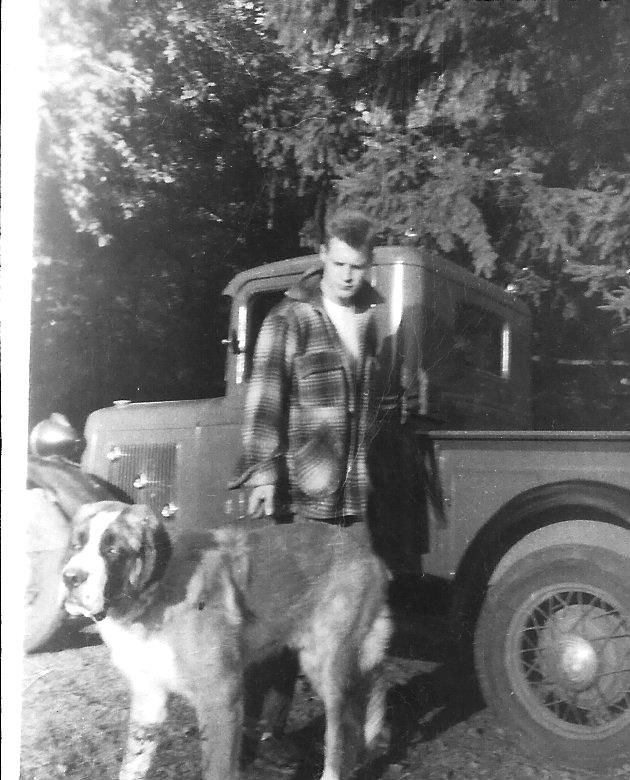
The year was 1947, that was his own truck and dog. Does he look like a 14 year old Jew boy to you? Haha, not hardly. He worked for his father in electrical contracting. Later his father sold his business and became a sales rep for a large electrical supply company, Westinghouse, I think. In the '50s they moved to Fort Worth, Florida because of Edith's chronic bronchitis.
 The next picture at right is from 1952 - Larry had joined the Navy and he ended up in the SeeBee's because he had great mechanical ability. He was in for 4 years and was stationed in the Philipines and somewhere in the Arctic Circle, both very boring places, he said. When he got out, he joined the rest of his family in Florida.
And finally, below, a picture taken in December 1975. You will be asking why there is no picture of us together. I have only come across one and I don't really like it, but if I don't find any more photos, I will post that one.
I think you can see from this that Larry Kahant was genuine Western European, just like me. 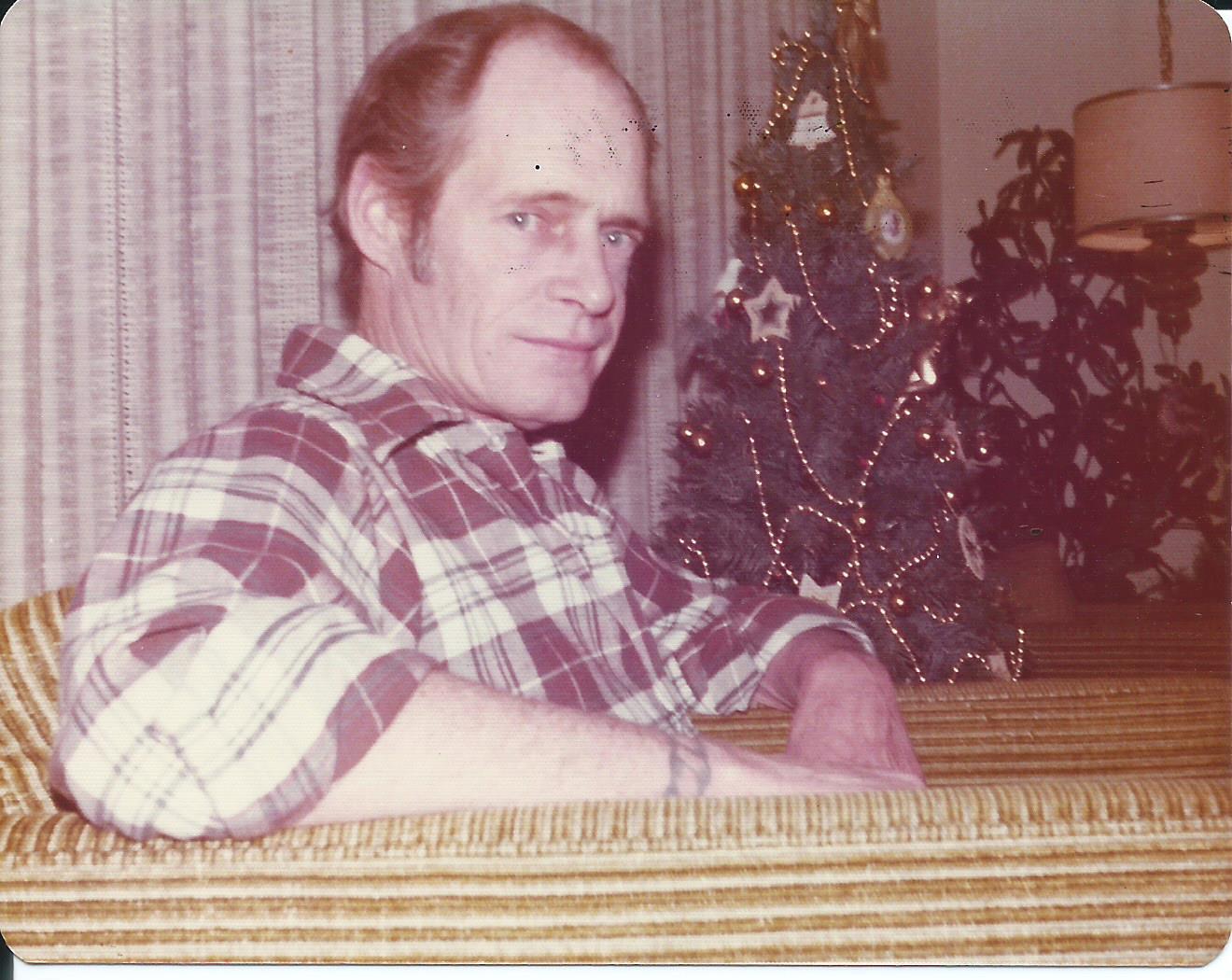
- 1026 views
Comments (2)
The Jewish name Cohen has many variations (among which is Kahane), but Kahant is not one of them.
See : Wikipedia : Kohen, Cohen (and its variations) as a surname.
The name Kahant seems to be of Irish origin and has a coat of arms. See : <i>Kahant Family Crest, Coat of Arms and Name History</i>. Your ex-husband's father may have come from Germany but his family must originally have come from Ireland, which is perhaps unusual but not impossible.
Kahn is a German name that the Jews have taken also. Kahant could have evolved as a version of that ...Kahnt to Kahant. I don't really know, but his brother and sisters thought it was perhaps shortened by immigration officers from a longer German name. They didn't think it was Irish. And they certainly didn't think it was Jewish. They actually thought they were the only family with the name Kahant in the United States. They had a few relatives also.
When I first met Larry's sister-in-law, I thought her name was Cahan ... as in Irish. That's the only form of the name I knew, and I continued to see it with that spelling for quite a long time. The Jewish Kahane, etc. never crossed my mind until I became "Jew-aware" in the real, hard sense, and that wasn't until 2005 or so. I understood about the Federal Reserve Jews, etc. in the 1990's but didn't connect any Jewishness to my name. It's unfortunate that Jews have made so many good Aryan names suspect.
Comments (5)
Hello Carolyn,
nancy
Hello Carolyn,
We are likely distantly related thru the Yager/Yeager line. My Yagers came to this
country in 1719 as indentured servants to Governor Spotswood of Virginia. In
2008, with members of the Germanna Colonies Society, I was able to actually visite the tiny village of Falkenstein in the Kraichgau where the Yagers had lived.
My other main German ancestor arrived in Virginia in 1714, Adam Hitt of the Seigen area with a small group of miners and their families who also were indentured to Governor Spotswood.
In addition to Hitt and Yager, I have many other German ancestors due to the intermarriage of these early families before and after their arrival in this MAD country....well it is now completely MAD!
Much research has been done on these very early Germans. I remain very proud to have descended from these hardy and hardworking intelligent people.
Some time ago, I questioned you about your ancestry and today I found it on your website.
Keep up the good work,
Nancy Hitt
I currently do book reviews for The First Freedom newspaper which takes a very pro-German slant!!!
Hi Nancy,
carolyn
I remember now that you had told me about the Yager side of your family. I assume it was spelled Jäger then.
At the same time your Jagers were emigrating to the USA, mine were emigrating to Hungary. Do you know if they were Catholic as were mine? Somehow it doesn't sound like it. Funny, of the four family names my four grandparents came from, the Jäger's left the least information about themselves. However, while my grandfather came as an unmarried young man, his brother followed him only quite a few years later, with a brand-new wife and three children already, two from his first wife. He settled in Sask. Canada, became a farmer and proceeded to have 3 more sons, whom all married, had numerous children and created an expanded Yeager clan up there. I have made contact with a 2nd cousin who is also very interested in this (he's a generation younger) through our both getting a DNA reading from 23andMe. I need to get back in touch with him again - he was recently in Germany. It's really hard for me to keep up with everything.
Thanks for informing me of this again. I used to read your articles in The First Freedom, yours and Chris Miller's. I stopped subscribing to it -- too much from the Internet and too much to read. It's tough, I know. I admire Olaf for his tenacity and great skills.
Yager/Yeagers
nancy
Thank you Carolyn. There has been much research done on those very early Germans who settled outside of Culpeper, Virginia, as cannon fodder in a five-sided fort to protect against the Indians as the British had not yet explored beyond the Blue Ridge Mountain Range. Governor Spotswood did so and is reputed to have presented each of his party with a golden horseshoe.
You would enjoy the information found at the Germanna Colonies Society recorded in books and on their website.
As I did mainly Confederate research during the past 15 or so years, I found a distant Yager cousin who rode with another one of my heroes, Quantrill.
Currently, my research is more directed toward the mistreatment of Germans past and present.
Olaf is also one of my heroes. He keeps the peace among our waring White people and has been persecuted and bravely faced the fire of our USofI justice system.
Christine is a friend of mine and also a courageous German woman.
All the best,
Nancy
P.S. Resubsribe to The First Freedom as we need all the help we can muster!!!!!
It's more accurate to just do
CM
It's more accurate to just do a DNA test.
I did do a DNA test.
carolyn
I did do a DNA test. And published it here. But a DNA test doesn't give you names and dates and marriage partners & children, does it.